When Alton Uyetake arrived at his desk at Hawaii’s Hilo Post Office recently, he found an envelope addressed only to the U.S. Postal Service in Hawaii. It was sent from Cleveland, but had no return address or name.
The envelope contained a note that read, “Please return to the beach,” along with a plastic bag filled with sand and sea shells.
Uyetake, the Hilo postmaster, has received many similar packages from tourists during his two-decade-long career with the Postal Service. While most don’t contain anything other than sand, rocks or shells, some include specific requests.
“Tell Pele I’m so sorry,” read a Post-It note

 Walter Toshio Nishihara, 85, of Honolulu, died in Honolulu on Friday, October 14, 2016 and was born in Waiakoa, Maui.
This obituary is probably for the Walter “Nishi” Nishihara who served in the 293d Combat Communications Squadron for many years as a vehicle mechanic.
The Honolulu Star Advertiser has chosen not to list more than basic information in their obituaries. Unless the family buys a “family placed obituary”, there is no information about survivors, where the individual worked or where services are scheduled. See: http://wp.me/p3639O-5iU
 Paul G. Phillps, August 21 1922-Octctober 16 2016 Parents Manuel and Gussie Phillips Paul grew up in Kapahulu and graduated from Roosevelt High School in 1941.
After graduation, Paul volunteered to serve as a colonist on Jarvis Island in the Central Pacific. The U.S. colonization of Jarvis and other Line Islands began in 1935 and included 130 young men from Hawai’i, who would later become known as the Hui Panala’au.
Following the attack on Pearl Harbor, eight of the colonists including Paul were stranded on Enderbury and Jarvis Islands until February 1942, when the “Forgotten Eight” were rescued by the U.S. Coast Guard. The colonization project ended quietly and Paul joined the Army and served in Okinawa.
Following his discharge, Paul attended aeronautical training in California. Returning to Hawai’i in 1947, Paul joined the Army National Guard and was sent to San Marcos, Texas for flight school.
There he married Patricia Lei Knapp. Pat and Paul returned to Hawai’i and Paul went to work as a lead mechanic for Hawaiian Airlines. He later became a full-time National Guardsman and had a distinguished career as a helicopter and fixed-wing pilot, eventually becoming known as “The Governor’s Pilot” for having been the pilot of choice for Governors Quinn, Burns and Ariyoshi. Paul retired as a Lt. Colonel in 1977.
During the latter part of Paul’s retirement, he worked with Noelle Kahanu and others towards gaining State and Federal recognition for the efforts of the Hui Panala’au. Paul was the last known living Hui Panala`au member. Paul and his family have lived in Kailua since 1953. He coached Little League, made fish nets, crabbed, picked ‘opihi, played golf, made feather lei, and was a charter member (1954) of the community club Hui Kaikunane, still in existence today.
Paul’s wife, Pat, and their children, Patti-Paul (Val), Merrillyn (Mario), Michael (Rosie), and Gordon, and his grandchildren, Nakoa, Kahele, Ana, and Kaimana, will forever love him and miss him.
Services: November 3, 11 am, Committal Shelter, Hawai’i State Veterans’ Cemetery, Hawaiian Memorial Park, Kane’ohe. Flowers and lei welcome, or donations to Paralyzed Veterans of America, Wounded Warrior Project, AMVETS, or Disabled American Veterans.
 Halloween is next Tuesday. Children love to dress up, enjoy parties and eat yummy treats. It’s great to have fun but remember that safety is the number one priority.
Checkout these safety tips and ideas.
Trick or Treat Rules
+ Children under the age of 12 should not trick-or-treat alone.
+ Children over 12 should walk in groups or with a trusted adult.
+ Make sure your child or a responsible adult with them carries a cell phone for quick communication.
+ Only visit well-lit homes and never accept rides from strangers.
Be Seen
+ Hold a flashlight while trick-or-treating to help you see and others see you.
+ Fastening reflective tape to costumes and bags also helps drivers see you.
Safe Costumes
+ Make sure costumes (including masks, beards and wigs) are flame resistant.
+ Swords, knives and other costume accessories should be short, soft and flexible.
+ Test make-up in small area and remove all make-up before bedtime to prevent possible skin and eye irritation.+ {Wear well-fitting masks, costumes and shoes to avoid blocked vision, trips and falls.
+ Do not allow your children to wear decorative contact lenses as they present a risk of serious eye injury.
Check Your Treats
+ An adult should examine all treats for choking hazards and tampering before eating them.
+ Tell your children not to eat any treats until they return home.
+ Avoid eating homemade treats made by a stranger.
+ When it doubt, throw it out.
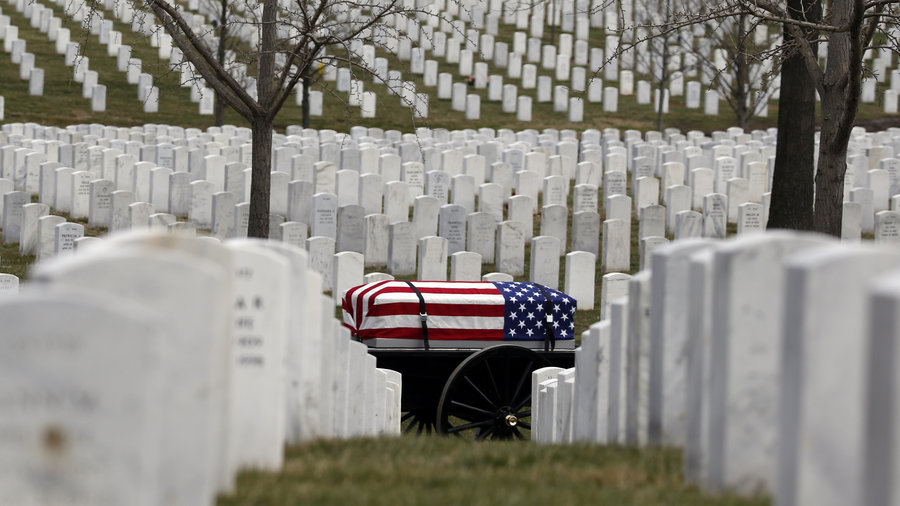
Pets will no longer be allowed to accompany visitors to Arlington National Cemetery starting Wednesday, one of several new policies announced by the Army.
Pets have “impacted the decorum” of funeral services and ceremonies at the Tomb of the Unknown Soldier, the Army said Monday when the service announced their banishment from the cemetery’s 624 acres.
“This policy has been deemed necessary to alleviate these impacts and continue to provide the type of respectful and contemplative space that Arlington National Cemetery strives to be,” a statement from the cemetery reads.
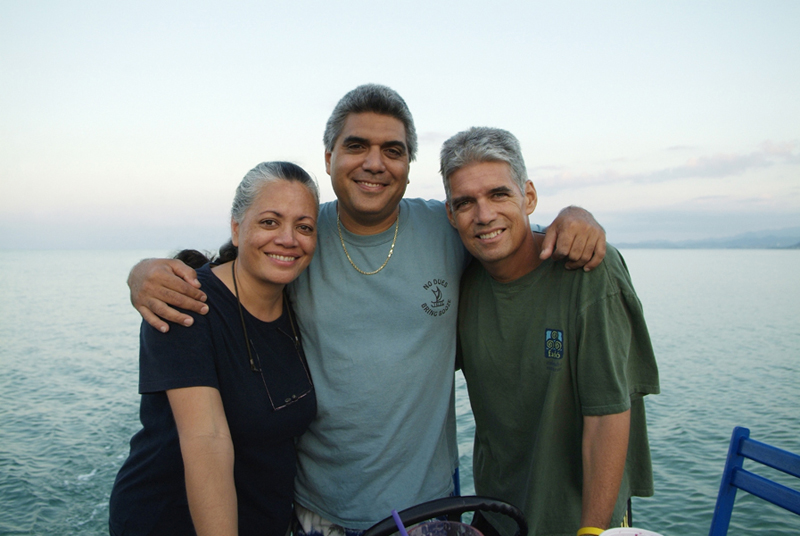
Garro (Rojo) Keeaumoku Johnson ended his long battle with cancer on October 29, 2006. In his second round with cancer, he refused to undergo further chemotherapy treatments. He passed away peacefully at Castle Hospital at 3:54 that morning. Rojo’s survivors included his wife, Laura and children Alena and Parker.


click on the photographs to enlarge
He was a second generation fighter pilot with the 199th Fighter Squadron. His father Kurt flew with the squadron from the 1950s through the 1980s.
Rojo was a superb pilot, and but more importantly, a friend to all. Someone printed “I Know Ro” stickers that adorned many cars driven by Air Guard members during his cancer battle.
We lost a great individual and friend on that October morning.
The lava lake within Halemaʻumaʻu Crater at the summit of Kīlauea Volcano is creating a scene remindful of a messy barbershop floor, except that it’s acres and acres wide rather than a few square feet. The ground downwind of the crater is strewn with Pele’s hair, and it is almost impossible to avoid stepping on it.
Such a scene has not been reported before at Kīlauea. What’s happening?


click on photographs to enlarge and read captions
Pele’s hair consists of long glass fibers that form when gas bubbles burst in the lava lake. Pieces of the fluid bubble skin are propelled violently into the air, drawing out into long, hair-like strands that cool to a golden-colored glass. Since the lake is bubbling almost constantly, large volumes of Pele’s hair are made daily. The resulting hair blows downwind from Halemaʻumaʻu, across the caldera, and into the Ka‘ū Desert.
The Pele’s hair collects against embankments, such as gully walls or curbs in the now-closed Halemaʻumaʻu Crater parking lot. It also is strewn across the ground surface, catching on small rocks and ultimately creating a web of interwoven hair. The web is streamlined, with most pieces of hair aligned with the wind direction.
When a south (kona) wind blows, Pele’s hair can easily reach the Jaggar Museum Overlook area in Hawaiʻi Volcanoes National Park, where it drapes ‘ōhi‘a like tinsel on a Christmas tree.
Drifts of Pele’s hair can survive for years and even decades, but, once the eruption has ended, wind will strip the hair from most surfaces. The photos included here show scenes that many will never see first-hand, because most of the Pele’s hair is blown downwind of the summit vent—an area of the national park that has been closed since 2008 due to elevated sulfur dioxide emissions and other ongoing volcanic hazards.
From the October 20, 2015 issue of Volcano Watch
Volcano Watch (http://hvo.wr.usgs.gov/volcanowatch/) is a weekly article and activity update written by U.S. Geological Survey Hawaiian Volcano Observatory scientists and affiliates.

The requests cascade in: Reset your password. Update your anti-virus program. If, as a computer user, such digital demands irritate you, you may have computer “security fatigue.”
It’s an actual phenomenon, studied by behavioral scientists and computer security experts. It happens when users get bombarded with security warnings and demands for compliance. As a result, the studies show, three-quarters of computer users know how to make strong passwords but don’t practice what they know. It just seems too overwhelming.
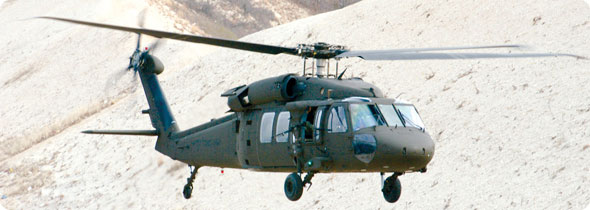
Kalaeloa, Hawaii -The Hawaii Army National Guard’s newest unit has received three HH-60M Blackhawk helicopters. The Blackhawks were offloaded from a C-17 transport at the Kalaeloa Airfield today. They will be assembled on-site and operate out of Wheeler Army Air Field until a new facility at Kalaeloa is completed.
Detachment 1, Company G, 1st Battalion, 189th Aviation Regiment is a new aeromedical evacuation unit and is in the process of filling its ranks. The detachment’s mission is to provide MEDEVAC support to military entities. The unit will have about 30 soldiers, most of whom will be drill status, or part-time forces. The unit will not provide full-time support to civil authorities, but when fully staffed, it may provide supplemental support.
This unit is one of the most requested types of units to deploy, with its specialty of MEDEVAC being in high demand.
The new Blackhawk models have a couple of features that differentiate them from the HIARNG’s current UH-60M Blackhawks. These HH-60M have an external hoist, a Forward Looking Infrared Radar (FLIR) and the capability to carry six litter patients or six ambulatory (or three of each patients) within its MEDEVAC cabin configuration. The four-person crew is made up of two pilots, one crew chief and one flight medic.
It will initially operate from Wheeler Army Airfield, Army Aviation Support Facility #1, until administrative requirements are completed. The new unit will then operate from the nearly completed Army Aviation Support Facility located at Kalaeloa. The Kalaeloa AASF cost $32.6 million and is being built by Watts Constructors, LLC. The estimated completion date is November 2016. The Kalaeloa AASF will encompass almost 67,000 square feet and will have a large hangar to support aircraft as well as an administrative area for classrooms, restrooms, conference rooms and offices.
Link to the video of the HH-60M offloading today at Kalaeloa here
Blossom send this email and photo to Retiree News. Retirement has been good to both of them. Thanks for sharing this great photograph.
Loving retirement. Mark and I sailed from Kaneohe Yacht Club to New Zealand. Our journey started 30 April 2016. Here we are at Musket Cove, Fiji.

 It’s no secret that healthcare costs aren’t getting any lower. In fact, over the past 50 years, healthcare costs have grown at an annualized rate of 6%. This means that healthcare costs today are more than 18 times higher than they were in 1966. Even so, you might be shocked to hear just how much American retirees should plan to spend on healthcare expenses.
A quarter-million-dollar healthcare tab. A recent report by Fidelity concluded that the average 65-year-old couple retiring in 2016 will need $260,000 to cover their medical expenses throughout retirement. This is a 6% increase over Fidelity’s findings a year ago, and can be attributed to longer life expectancies, rapidly rising prescription drug costs, and higher medical-service utilization levels.
Lori Ann Lopez (Hawaii Air National Guard) and Maelani Moore (Hawaii Army National Guard) received the Navy League of the United States 2016 Military Key Spouse certificate and the Mayor’s Award of Recognition at a ceremony held at Honolulu Hale, October 27, 2016.

L-R: Kiman Wong, BG Kenneth Hara, Adm. Richard Macke, Lori Ann Lopez, Roy Amemiya Jr., Jane Ferreira

L-R: Kiman Wong, BG Kenneth Hara, Adm. Richard Macke, Maelani Moore, Roy Amemiya Jr., Jane Ferreira
Also present were retired Admiral Richard Macke (President, Honolulu Navy League), Jane Ferreira (Executive Director, Honolulu Navy League), Roy Amemiya Jr. (Managing Director, C&C Honolulu), Kiman Wong (Director, Wireless, Phone and Intelligent Home, Charter Communications), and Brig. Gen. Kenneth S. Hara (Deputy Adjutant General, Hawaii DoD).
Congratulations to Lori and Maelani!
* Charter Communications formerly known as Oceanic Time Warner Cable
 Benefits.gov would like to help connect active duty service members, Veterans, and their families to the many benefit programs offered by the Federal government. Our site houses information on over 65 programs from the VA and several more from other Federal agencies to support our nation’s Veterans.
These programs include the Education and Vocational Counseling program, which helps Veterans assess vocational interests; the Services and Aid for Blind Veterans program, which provides personal and social adjustment programs and medical or health-related services for eligible blinded Veterans; and the Veterans Pension which is a needs-based benefit paid to eligible wartime Veterans who meet certain age or non-service connected disability requirements. These are just three of the many programs offered to help support our Vets. You can view the rest of these benefits on our Military: Active Duty and Veterans category page.
To learn more about assistance programs and other initiatives for Veterans, please visit the VA website at VA.gov. Benefits.gov thanks all Veterans and active service members for their dedication to our country.