Enjoy unwinding at the end of the day with a glass of wine? While there’s no doubt that drinking wine – or any alcoholic beverage – in excess can adversely affect your health, career, and social relationships, there’s some evidence that moderate consumption of wine may have significant health benefits.
Still, some health professionals continue to warn against the dangers of alcohol consumption, making it hard to piece together the real story about wine, your health, and longevity.
It appears the jury is still out on whether red wine is really good or bad for you.
 Working for several decades and then retiring isn’t the only way to balance work and leisure time. You could gradually reduce your hours instead of completely retiring or take mini-retirements throughout your lifetime instead of a long retirement at the end of your career.
Here are some alternatives to a traditional retirement.
 Many, if not most, of us can’t wait to retire. We may be counting the years and dreaming of things we’ll finally get around to doing. We may be checking out boats or recreational vehicles in magazines. But too many people are approaching retirement without having a good sense of whether they’re really ready to retire.
Below are a big bunch of issues to consider that can help you tell if you’re ready to retire.
 A college education — even at a highly rated private institution — was once regarded as a relatively affordable route to lifelong prosperity, but in recent years it has become a hobbling financial burden for many families.
As a result, older generations are often stepping up to help their families with college funding. According to a Fidelity Investments survey of its investors — a more affluent group than the average — more than half of grandparents “are saving or plan to start saving to help pay for college costs.”
click on photograph to enlarge
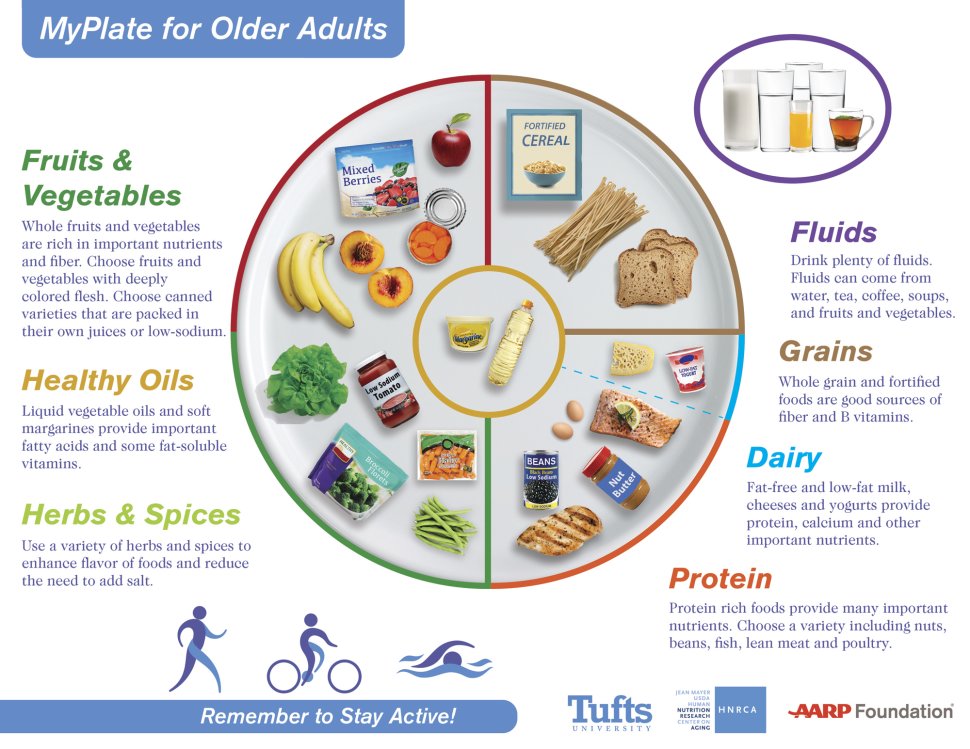
Last week, the revamped MyPlate for Older Adults icon was unveiled at a Capitol Hill luncheon featuring healthy foods straight from the plate. As the audience dined on lean fish or poultry, berries, grains and leafy greens, the panel – including a congressman, a senior USDA scientist and the head of the AARP Foundation – talked about good nutrition for seniors. MyPlate for Older Adults is based on the 2015-2020 Dietary Guidelines for Americans. Most guidelines apply to adults of any age, while the new MyPlate offers adjustments to meet the needs of older Americans.
 The state Na Ala Hele Trail and Access Program has rolled out a new website designed to put comprehensive information on its trails at the fingertips of anyone with a smartphone. Designed to funnel nature explorers onto sanctioned state trails, the new features will help hikers put away their guidebooks and maps.
The site should also take some of the guesswork out of choosing a hiking spot on an island where extreme weather can leave trails closed and where access can be fuzzy because of unclear jurisdiction and sometimes misleading and improvised signage.

High-potassium foods are an essential part of any balanced diet: The mineral helps to regulate your body’s fluid levels, aids in muscular function and waste removal, and helps keep your nervous system functioning properly. Potassium also helps reduce blood pressure in people with hypertension and lowers your risk for stroke.
A deficiency in potassium can cause fatigue, insomnia, depression, muscular weakness, and many cardiovascular issues. Though people with kidney problems should avoid eating too many high-potassium foods, most adults should intake about 4,700 milligrams a day. Here are 10 high-potassium foods to help you reach that number.
From The Huffington Post

Your boarding pass may seem like a piece of paper that gets you from point A to point B, but that jumble of numbers and letters surrounding your name can actually tell you a lot about your trip.
Your boarding pass lets all of the airline employees from security to the gate know who you are, what you’ll be eating and, to some extent, how well you will be treated.

click on flyer to enlarge

The pūpūkahi is the State of Hawaii Department of Defense monthly newsletter. Printed versions of the pūpūkahi have been the “command information” newsletter for decades. Read the June 1997 pūpūkahi

For many Americans, Social Security benefits are the bedrock of retirement income. Maximizing that stream of income is critical to funding your retirement dreams.
The rules for claiming benefits can be complex, and recent changes to Social Security rules created a lot of confusion. But this guide will help you wade through the details. By educating yourself about Social Security, you can ensure that you claim the maximum amount to which you are entitled. Here are ten essentials you need to know.

In the United States, Flag Day is celebrated on June 14. It commemorates the adoption of the flag of the United States, which happened on that day in 1777 by resolution of the Second Continental Congress. The United States Army also celebrates the Army Birthday on this date; Congress adopted “the American continental army” after reaching a consensus position in the Committee of the Whole on June 14, 1775.
In 1916, President Woodrow Wilson issued a proclamation that officially established June 14 as Flag Day; in August 1949, National Flag Day was established by an Act of Congress.
 Heart disease is a major threat to senior health — in fact, 84 percent of people age 65 years and older die from heart disease. Though heart disease risks increase with age, it doesn’t have to be an inevitable part of getting older. The right lifestyle habits and a heart-healthy diet can help protect you.
What exactly is heart disease? It’s the term given to a group of different health conditions that affect the heart. In the United States, the most common form of heart disease is called coronary artery disease (CAD). CAD is often responsible for serious cardiovascular events like a heart attack, heart failure, chest pain, and irregular heartbeat, also called arrhythmia.