

This undated photograph shows Alan “Bizzare” Robinson, Michael “Boss” Tice and Michael “Mick” Melich. Asked Boss and Mick for comments about this photograph:
Boss: These are pictures I don’t recall ever seeing … It looks like it must have been on a deployment. I’m guessing to Clark, but I have no idea what we may have been presented with.
Mick: I do not recall that photo either. It looks like we were in the PI and MAYBE it was the time we teamed up with the Aggressors and flew as Red Force against the F-15’s from Kadena….not sure though. Why we would have received some sort of award while over there is puzzling.
Trying to work while caring for an aging loved one can be difficult, stressful and at times overwhelming. Many people feel they must quit, take a leave of absence or at least reduce their hours in order to cope.
Sometimes, caregivers have little choice. But often people don’t realize the heavy financial toll they’ll pay or adequately research options that could allow them to keep working, says Amy Goyer, AARP’s national family and caregiving expert.
Note the advertising disclosure at the top of the article.
The IRS, which is dealing with a backlog of unprocessed tax returns dating back to 2020, has urged taxpayers to file their returns electronically. But filing electronically doesn’t stop the clock on potential audits, nor on your right to file an amended return.
Generally, the IRS has three years from the date you file to audit your return. You also have three years to file an amended return. That means for the 2021 tax season, for instance, you should hold on to your Form W-2s and any 1099 forms generated from freelance income, unemployment benefits or investment income (such as taxable dividends, capital gains and interest), records relating to a 401(k) rollover or other retirement information, and receipts for deductible expenses until at least 2025. Some experts suggest keeping your documents for four years to be on the safe side.
From the Kaiser Health News website
The drug industry, patient advocates, and congressional Republicans have all attacked federal officials’ decision to decline routine Medicare coverage for a controversial Alzheimer’s drug. They’ve gone as far as to accuse them of tacit racism, ageism, and discrimination against the disabled — and hinted at a lawsuit — over the decision to pay only for patients taking the drug in a clinical trial.
The drug industry, patient advocates, and congressional Republicans have all attacked federal officials’ decision to decline routine Medicare coverage for a controversial Alzheimer’s drug. They’ve gone as far as to accuse them of tacit racism, ageism, and discrimination against the disabled — and hinted at a lawsuit — over the decision to pay only for patients taking the drug in a clinical trial.
The drug, Aduhelm, with a listed price tag of $28,200 a year, has had few takers in the medical world. Brain doctors are leery of administering the intravenous drug because it appears dangerous and largely ineffective. Many of the nation’s most prestigious hospitals — such as the Cleveland Clinic, Johns Hopkins Hospital, and Massachusetts General in Boston — have declined to offer it to patients.

Taken from the HANG 25 Booklet, the History of the Hawaii Air National Guard, November 4, 1946 to November 3, 1971
The first aircraft the newly recognized 199th Fighter Squadron received was Douglas A-26 Invader, no. 433 on March 19, 1947. The A-26 was redesignated a B-26 Invader in 1948. Eventually, the squadron possessed four TB-26Cs.
The first major accident occurred May 9, 1948 when TB-26B, no. 294 made a wheels-up emergency landing (touchdown at 92 knots and skidded 500 feet). The aircrew were lst Lt Robert 8. Maguire, lst Lt Julian M. Blomburg and SSgt George Miller. The Accident Board found this was due to maladjustment of the landing gear uplock assembly, and the left main gear failed to extend.
Five novel B-26 missions were flown in the latter part of 1953-dispensing salt water and dry ice for rain- making efforts over the drought-stricken islands of Maui and Molokai. These were under the auspices of the Territorial Board of Agriculture and Forestry. Mission accomplishment was dubious.
Exactly when the B-26s left the 199 FS inventory is unknown, but the mid-1950s is commonly mentioned by older retirees.
Ask your agent to explain the difference between Replacement cost coverage and Actual cash value coverage when purchasing or reviewing your policy. For more consumer information
Mobile health apps can help older Americans but only about four in 10 use them, and those most likely to benefit are least likely to take advantage of them, a new survey reveals.
Health apps monitor everything from calories and exercise to blood pressure and blood sugar to help users manage chronic conditions or achieve health goals.
From the U.S. News & World Report website
Some foods and drugs don’t mix.
When taking prescription medications to lower your cholesterol, prevent blood clots, treat an infection or ease depression, you may need to avoid foods or beverages that cancel out – or overly heighten – the desired drug effect. Certain foods can interact with more than one type of drug.
In some cases, you can tweak meal timing around scheduled doses to keep enjoying favorite foods. Here are some common food-drug interactions and how to prevent them:
Off Track: The secret recipe that has helped Hawaii institution Liliha Bakery stay open for 71 years

Liliha Bakery is one of the oldest bake shops in Hawaii, and one of the few food establishments period that dates back to the middle of the 20th century.
Roy and Koo Takakuwa opened it in 1950 as a small shop on Liliha Street in Honolulu, where they sold loaves of bread. As popularity grew, the Takakuwas moved the bakery in 1961 to Kuakini Street (where you can still find the original location today), and over time, their baked goods have grown to include 150 varieties of doughnuts, pastries and cakes.
Off the Hawaii Air National Guard Facebook page
February is a special time of the year to pause and reflect on the nonstop contributions of black service members, whom we are proud to consider ‘ohana.

Staff Sgt. Skyler Ross has been serving his community for more than a decade as an Air Traffic Controller Radar Specialist in the 297th Air Traffic Control Squadron.
He decided to take on the oath of enlistment, knowing that he would be ready to give back and protect the State of Hawaii in times of great need. Most recently, he answered the call and supported the State’s COVID-19 response in HING Headquarters’ Joint Task Force, as well as the lava flows which impacted the Island of Hawaii in 2018.
“Growing up in Hawaii and a military family, it was important to me to stand up and fight for the freedoms of the nation, and to protect the place in which I grew up in for the future generations.”
Skyler is a second generation Hawai‘i Air National Guard member. His proud father is Carswell “Caz” Ross, the retired chief master sergeant who served many years in the 154th Wing and HQ, Hawai‘i Air National Guard. A Traditional Guardmember, Caz worked at the Hawai‘i Office of Veterans Service.
Long-term care expenses are growing, with sizable hikes for home-based services as the industry struggles to meet soaring demand from aging Americans.
That’s according to Genworth’s 2021 Cost of Care Survey, a yearly report covering nationwide senior caregiving.
While the median yearly costs rose across all provider types, home-based expenses — such as home health aids for bathing, dressing or eating, and homemaker services for cooking, cleaning or errands —grew by double-digit percentages in 2021.
From the Medical News Today website
In a new study, researchers found a link between increased risk of dementia and multiple chronic conditions during midlife.
The paper, which appears in the BMJ, provides scientists with information that might help people reduce their risk of dementia in later life.
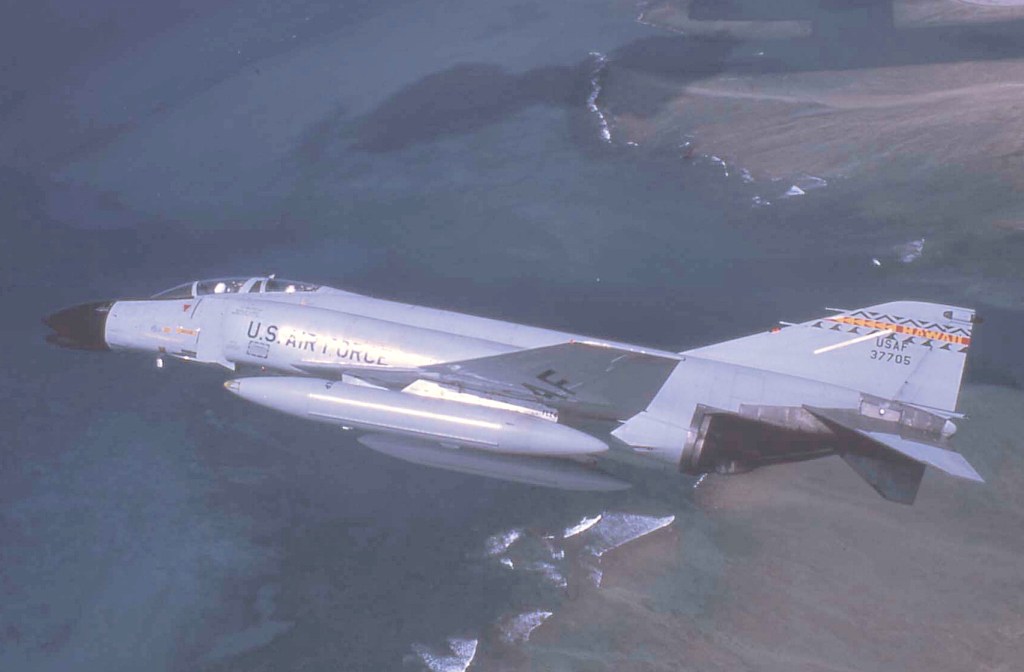
The 199th Fighter Squadron flew McDonnell Douglas F-4C Phantoms from 1976 through 1987.
When the 199th Fighter Squadron converted to the Phantoms, it was a pivot point in the unit’s history. The previous fighter aircraft – P/F-47 Thunderbolts, F-86E/L Sabres and the F-102A Delta Daggers – all saw combat time in World War II, the Korean War, and Vietnam. But these aircraft were not air-to-air refuelable and were shipped overseas by cargo ships.
The Phantoms were air-to-air refuelable. After becoming fully operational, the 199 FS began overseas deployments to Korea, Japan, the Philippines, and Europe. Those deployments continued in the F-15 Eagle and the current F-22 Raptor eras to worldwide locations.
Another important change, the squadron doubled in size with the addition of weapons systems officers (WSOs). There were facility modifications to support these additional crewmembers, and increased support function space needs.
The support functions, especially maintenance and supply, had increased requirements. The conversion training was challenging, but the Group’s personnel met the challenges and excelled. The Air Force awarded the Group several Air Force Outstanding Units Awards during this 11 year period.
Mahalo to all who served during this important period in the 154th Wing’s history.
From the National Museum of the United States Air Force website

Eagle Vision was the world’s first mobile satellite imagery collection system. US Air Force Airmen used it to collect and distribute unclassified commercial satellite images for military use and civilian disaster relief. For nearly three decades, it aided US and coalition forces and helped emergency responders handle natural disasters such as hurricanes and earthquakes.
The then 293rd Combat Communications Squadron was one of the five Total Air Force units equipped with a Eagle Vision system. The dedication for this equipment was held on November 4, 2004. Since then, this equipment and support personnel have deployed to many worldwide locations to support military and disaster relief missions.
Earlier Retiree News Eagle Vision post:
Eagle Vision exchange ‘focuses’ on U.S., Philippines military-to-military relationship

 Retiree News