From the Hawaii Magazine website
What better way than a farm tour to learn about Hawai’i’s rich agriculture history—and sample some of the freshest fruits around? Based on our 2020 Readers’ Choice Awards, these five farms offer the best tours.

Susan Brickman’s monthly Medicare premiums jumped almost 70% this year, to $559, after the widow of two years found herself in a higher tax bracket as a single taxpayer.
“I felt offended that it happened,” says the 72-year-old Brickman, who lives in Charlottesville, Va. “I also feel, and this is crazy, ‘Why am I being punished for being a widow?’ ”
Medicare has a series of income limits that trigger increasingly higher payments for retirees. And it’s not just the rich who are affected. Brickman’s 2018 modified adjusted gross income of $163,414—derived from a combination of required minimum distributions, Social Security, and her husband’s pensions—was just enough to put her in the second-highest Medicare bracket (which begins at $163,000) and drive up her premium this year.
Off the Hawaii Air National Guard Facebook page
The Hawai‘i Air National Guard would like to congratulate and welcome back our newest 2nd Lieutenants from officer training school. Over the last 8 weeks they completed officer training at Maxwell Air Force Base, Alabama where they blended Air Force core values and leadership skills to prepare them for mission success in the HIANG. They received their commission and swore in their oath of office on July 9th.

Pictured from left to right: Deborah Kwan, 154th Wing, Laurel Ramerio, 169th Air Defense Squadron, Virginia Ying, 201st Combat Operations Squadron, James Ro, 293rd Combat Communication Squadron, Zeran Ka‘anapu, 291st Combat Communications Squadron, Sharon Le, 154th Maintenance Squadron.
From the This Day in Aviation website

12 July 1980: The first McDonnell Douglas KC-10A Extender, serial number 79-0433, made its first flight at Long Beach, California with company test pilots Walt Smith and George Jansen, flight engineer Leo Hazell, and flight test engineer Guy Lowery.
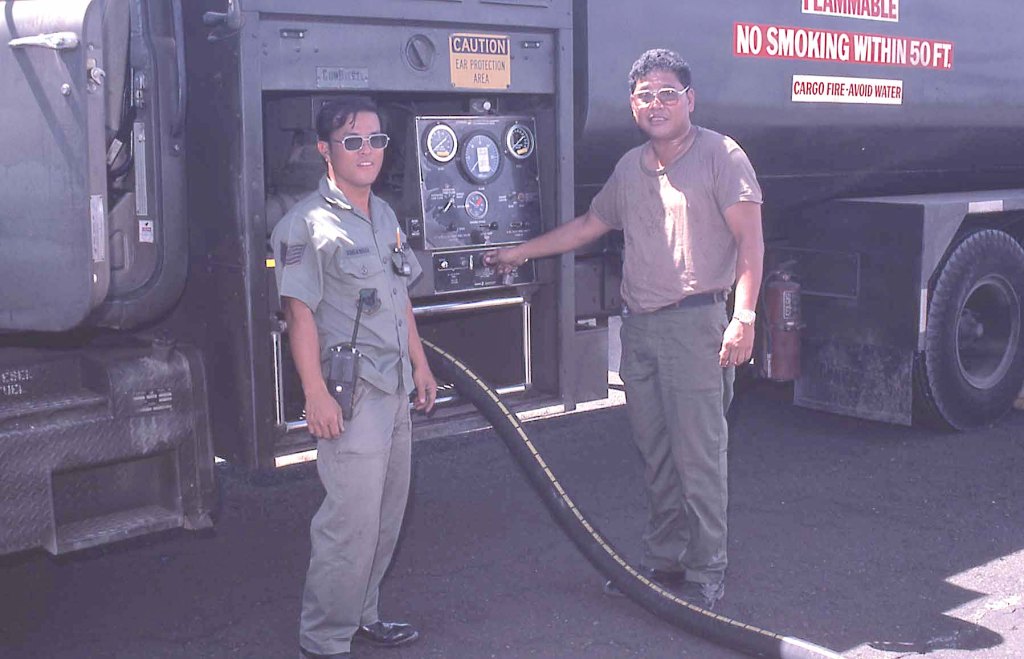
Retiree News asked Glenn Sugawara (on the left) about this photograph.
The person in the photo is Norman Kurata, a drill status member. It must have been during one of our UTAs. Believe the timeframe was around the late 80’s to mid 90’s.
Glenn served as technician for most of his HIANG career. When he retired, he was a chief master sergeant and the fuels superintendent.
Refuelers continue to be an important part of the flightline team that keep the Hawai’i Air National Guard aircraft flying.

From the Department of Defense website
More than 7,000 American service members have been killed in the wars in Afghanistan and Iraq alone since September 11, 2001. More than 16,000 have died of other causes in that time. Gold Star families have borne the losses, and Defense Department officials want Americans – especially those serving in the department – to understand what the Gold Star lapel pin and Next of Kin lapel pins mean.

The case of a retired sailor who was court-martialed after leaving the Navy has reached the military’s highest appeals court, potentially setting the stage for a U.S. Supreme Court battle on the matter.
Stephen Begani, a retired Navy chief petty officer who was court-martialed after being picked up by federal agents about a month after leaving active duty, has taken his case to the U.S. Court of Appeals for the Armed Forces.
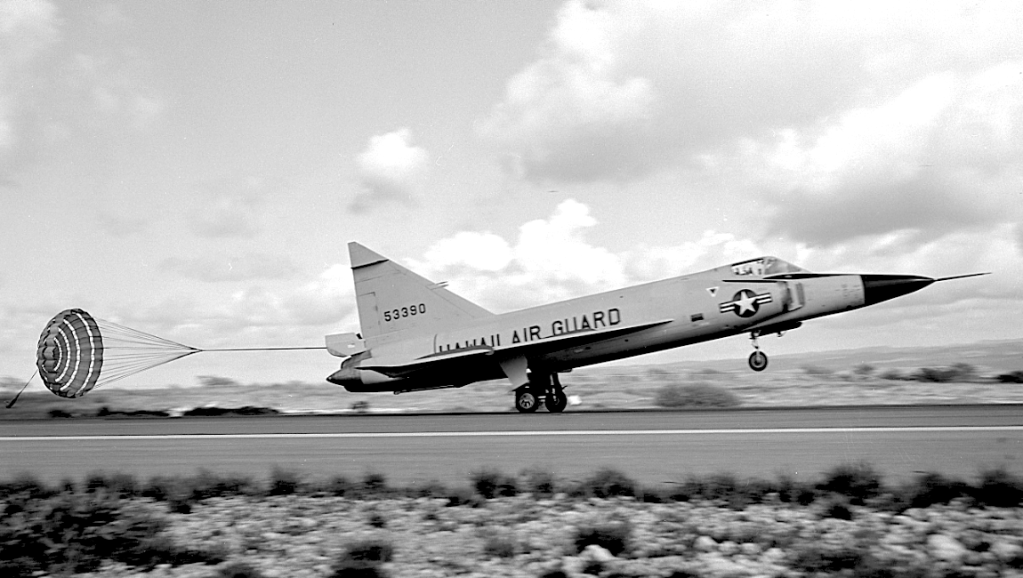
The F-102 Delta Dagger deployed a drag chute in addition to a speed brake during landing operations. This one of the few photographs Retiree News has that shows a Deuce landing with drag chute deployed.
This photograph is undated but was probably from the early 1960s. The Deuces arrived in 1961 and other photographs dated 1964/65 show aircraft with “U.S. Air Force” makings.
The drag chute was new to flight operations. The Deuce replaced the F-86L Sabre Interceptor which did not use a drag chute. The parachute shop now packed these drag chutes in addition to individual parachutes for the pilots.
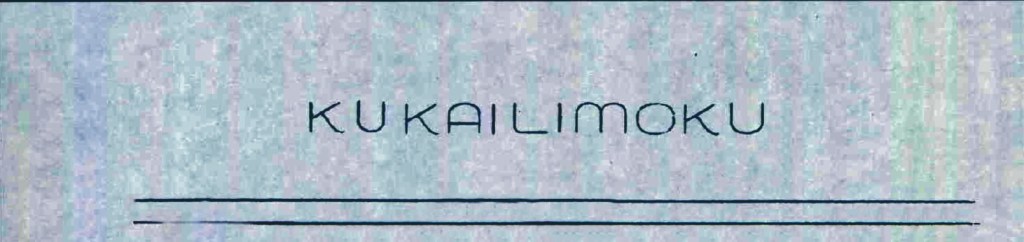
The Kūkā‘ilimoku is the official e-newsletter of the 154th Wing, Hawai’i Air National Guard. The first issue came in September 1957 and continues as a monthly newsletter today.
Today we feature the July 1958 Kūkā‘ilimoku issue. This issue includes the following stories:
* Middle East Crisis
* “Good Show”
* First Look at New Senior Master and Chief Master Sergeant Insignias

Sometimes tiny, bulging pouches (called diverticula) form in the colon. This condition is called diverticulosis. If the pouches become inflamed or infected, this is diverticulitis.
Having diverticulosis is very common and most people never know they have it. Half of all people older than 60 have it.
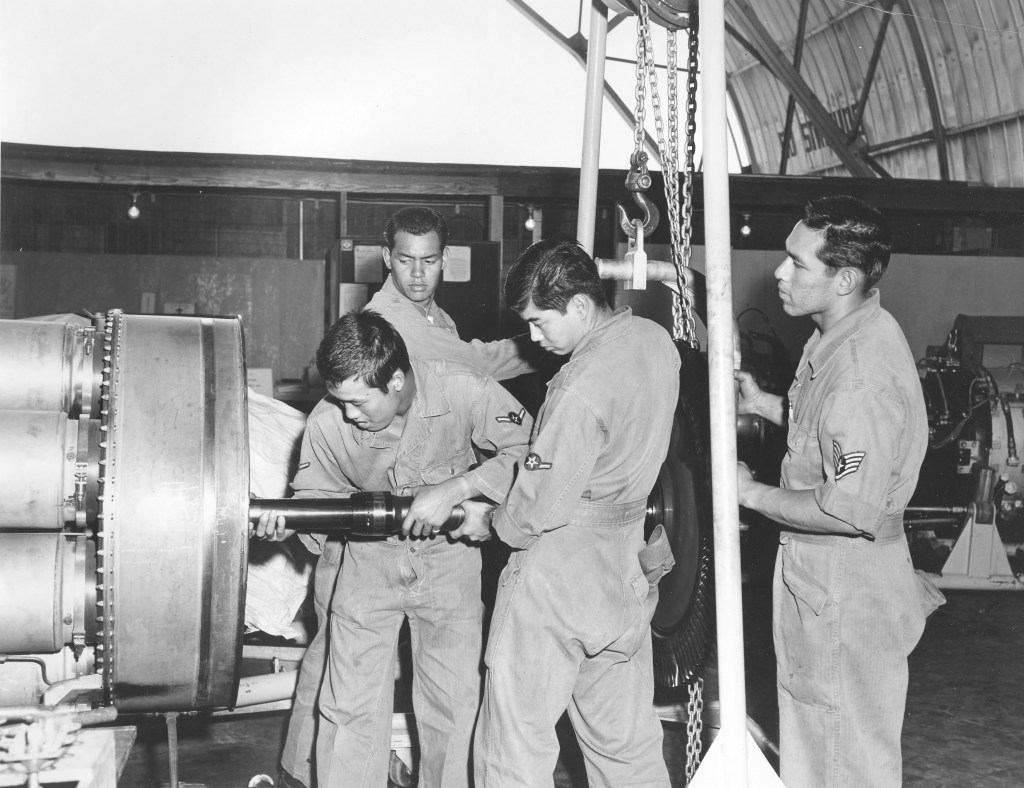
This undated photograph shows Airmen repairing a jet engine. It was taken in the old Hawaii Air National Guard facilities in Area 65 before the move to the current compound in 1961.
The Airmen are wearing the old coverall uniform and two of them have Airman Third Class insignia. The current E-2 pay grade rank of Airman was called Airman Third Class from 1952 to 1967. This rank insignia was called “mosquito wings”.
Any of the retirees recognize anyone in this photograph?
From the Military Times website
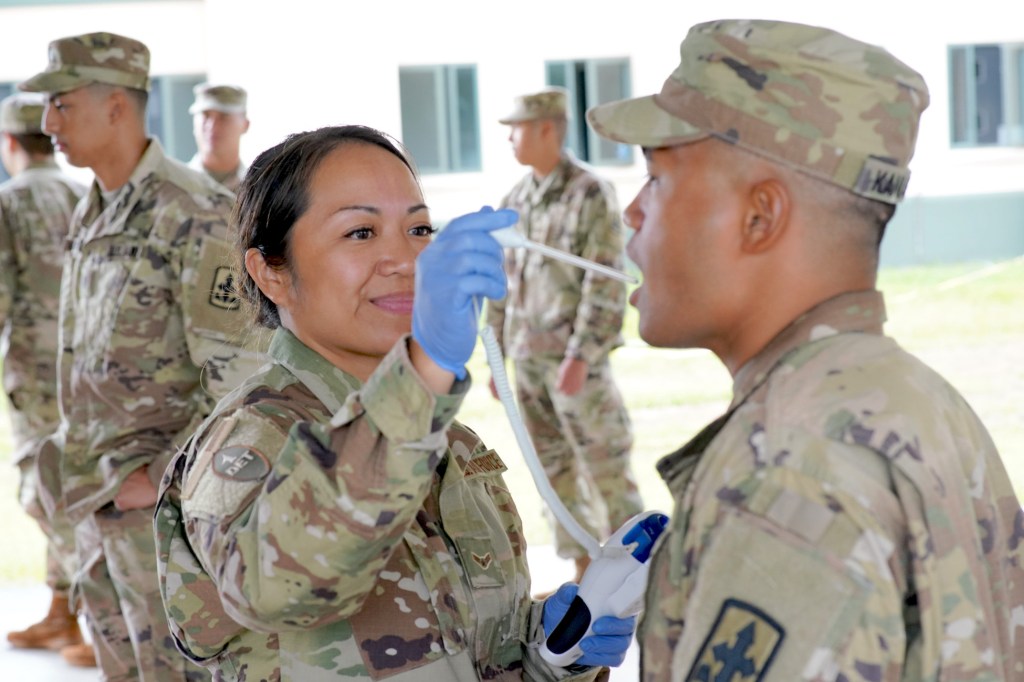
There are still more than 30,000 National Guardsmen activated for coronavirus pandemic response, the head of the National Guard Bureau said Thursday, and there is no end in sight.
Since March troops have been mobilizing to work in hospitals, staff testing stations, distribute supplies and otherwise provide logistics back-up to local agencies, and that is likely to continue.

You may be wondering about your odds of an IRS audit. Most people can breathe easy. The vast majority of individual returns escape the IRS audit machine. In 2019, the Internal Revenue Service audited only 0.4% of all individual tax returns, and 80% of these exams were conducted by mail, meaning most taxpayers never met with an IRS agent in person. So the odds are generally pretty low that your return will be picked for review.
That said, your chances of being audited or otherwise hearing from the IRS escalate depending on various factors. Math errors may draw IRS inquiry, but they’ll rarely lead to a full-blown exam. Check out these 10 red flags that could increase the chances that the IRS will give the return of a retired taxpayer special, and probably unwelcome, attention.