The RSVP date passed but please call if you are attending.
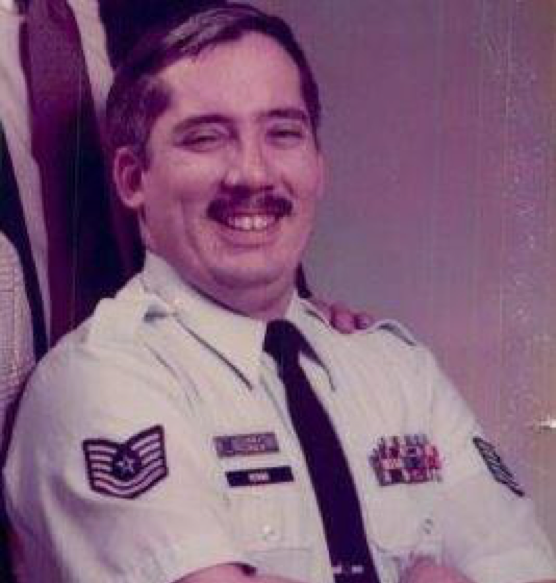
MSgt Gerald “Jerry” Verno, Sr. was an Air Force Advisor assigned to the 201st Combat Communications Group. Jerry served with the 201 CCG from 1984-1988. He retired in 1992 after a 23-year Air Force career. Jerry was one of the great advisors who served with the 201 CCG over the years.
His Facebook page shows him in Mertle Beach, South Carolina, He is the manager for the ground handling of three (3) airlines. Porter Airlines, Elite Airlines, and Sun Country Airlines.
The then-Air Force Communications Command (AFCC) was the gaining command for all ANG combat comm units. AFCC was headquartered at Scott AFB, Illinois, and imbedded these active duty advisors into ANG combat comm units.
From the CNBC website
 Medicare is taking extra steps to ensure your security. Not all of them are working.
For starters, Medicare’s new ID cards — meant to curb ID theft by replacing the Social Security number with a randomly generated 11-digit code — have prompted a new wave of scammers.
F rom the Military Times website
While a second mortgage may not be a preferred financial option, unexpected expenses or other budget crunches may make it a requirement.
Troops and veterans seeking an additional mortgage may qualify for a VA-backed loan, even if their property’s first mortgage was financed using their VA benefits.
There are some hoops to jump through. Here’s a breakdown, from the VA Lenders Handbook:

Air Force Brig. Gen. I.G. Brown presents the NCO academy diploma to Tech. Sgt. G.M. Matsuguma, Class 69-D, from Hawaii during the graduation ceremony on McGhee Tyson Air National Guard Base in East Tennessee. General Brown established the Air Guard’s NCO academy in his name and retired in 1974 after achieving the rank of Major General and serving as the 1st Director of the Air Guard. (U.S. Air National Guard file photo)
Guy Matsuguma worked in the F-102 Delta Daggar simulator section with Richard K. Kudo and shop chief, Benjamin Goo. The Air Guard’s NCO Academy began in 1968 at McGhee Tyson ANGB in Marysville, Tennessee. Guy was among the first Hawaii Air National Guardmembers to attend this in-residence.
During his off-duty hours, Guy was a volunteer who taught cardiopulmonary resuscitation (CPR). His family had a history of heart ailments. Unfortunately, Guy passed away on January 1, 1976 of a heart attack. He was 38 years old.
From the Kiplinger Magazine website
 Lately, clients seem to be more concerned than usual that a market correction is looming. And naturally those nearing retirement want to be sure their nest egg is protected.
Of course, no one can predict what the market will do next — and it’s a dangerous game to try — so it’s best to focus on what you can control, rather than what you can’t.
From the Military.com website
 Over the last few weeks, I have heard from many Tricare for Life beneficiaries caught off guard by the recent increase to pharmacy costs, including a change that moved drugs that had been completely free to a charge of $7 for a 90-day supply.
Drug prices increased Feb. 1 for all Tricare users, including retirees over 65 on Tricare for Life.

Arthur Ishimoto served as the Adjutant General from January 1, 1982 to April 7, 1983.
He enlisted in the Army in 1944 and served as an interrogator and translator in General Douglas MacArthur’s intelligence section during World War II. After the war, he joined the 442nd Infantry and received a direct commission to second lieutenant. He transferred to the Hawaii Air National Guard in 1949.
During his HIANG career, he is credited as the chief planner of the Hawaii Air Defense System. In this April 5, 2017 interview with an unnamed University of Alaska researcher, Ishimoto details the development of the air defense system. The interview was later posted on the Japanese American Veterans’ Association website.
From the Real Deal Retirement website
 When it comes retirement planning, we naturally tend to focus on the risks we’re most aware of, say, the possibility that this nine-year-old bull market could give way to a ravaging bear and take a big chunk out of our savings or that an unscrupulous or incompetent adviser might talk us into inappropriate or expensive investments. And those are valid concerns. But our retirement plans can also be endangered by risks that aren’t as apparent, which can make them all the more insidious.
From the Wired Magazine website
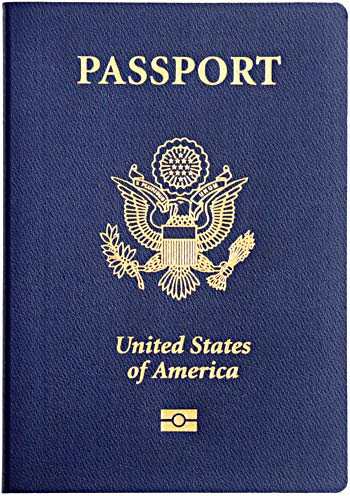 Passports, like any physical ID, can be altered and forged. That’s partly why for the last 11 years the United States has put RFID chips in the back panel of its passports, creating so-called e-Passports. The chip stores your passport information—like name, date of birth, passport number, your photo, and even a biometric identifier—for quick, machine-readable border checks.
And while e-Passports also store a cryptographic signature to prevent tampering or forgeries, it turns out that despite having over a decade to do so, US Customs and Border Protection hasn’t deployed the software needed to actually verify it.
 Several topics today:
– BG Kenneth Hara’s new assignment
– What’s going on with the commissaries
– Janine Obando retires
– More photographs
Continue reading – Webmaster Comments 18.02.24
From the Military.com website
The Air Force is determining how best to move forward with the Defense Department’s new hazing and misconduct policy, aiming to follow guidelines while still keeping some traditions associated with the practice of “tacking-on” rank or insignia during promotion ceremonies, the top enlisted leader of the Air Force said Thursday.
The policy, released earlier this month, includes a definition of hazing that explicitly encompasses “pinning” or “tacking-on” during promotions.
Wired Magazine has a monthly feature called “What’s Inside” where the staff researches and shares the ingredients of some of your favorite products.

Summertime means emerging from your dimly lit cubicle to expose your pallid skin to some precious rays of sunshine. But that presents you with a sticky dilemma: Slather yourself in UV-fighting goop or increase your chance of skin cancer (just five sunburns doubles your risk for melanoma).
Fortunately for heliophiles, Neutrogena scientists developed this formula, which is based on something the company calls Micromesh technology. Instead of having that Tacky Glue–like consistency, this stuff is lightweight yet still shields your epidermis from harmful rays as you sweat through your beach volleyball game. It’s supposed to keep you cooler, too, but it’s not magic: You still have to reapply at least every two hours.

click on photograph to enlarge
The 199th Fighter Squadron flew F-102 Delta Daggars from 1960 through 1976. The 1973 photograph above shows a TF-102, the two seat trainer on the Hawaii Air National Guard ramp. The then-154th Fighter Interceptor Group had two trainer aircraft over the F-102 era.