From the Occupational Safety and Health Administration Website

This post covers OSHA guidance on COVID-19. Do note the FAQs section and “Know your rights”.
This webpage provides information for workers and employers about the evolving coronavirus outbreak first identified in Wuhan City, Hubei Province, China. The information includes links to interim guidance and other resources for preventing exposures to, and infection with, the novel coronavirus—now officially named COVID-19.
According to the U.S. Centers for Disease Control and Prevention (CDC), Chinese authorities identified the new coronavirus, which has resulted in confirmed human infections in China and a growing number of other countries, including the United States. Infected patients have also spread the virus to healthcare workers. The latest situation summary updates are available on CDC’s COVID-19 webpage.
Flying past Diamond Head and Waikiki Beach in the late 1950s. Pan American’s B-377 Strato-Clipper. pic.twitter.com/1VXD1M6xnw
— Hawaii Aviation (@HawaiiAviation) August 14, 2018
From the Air Force Magazine website
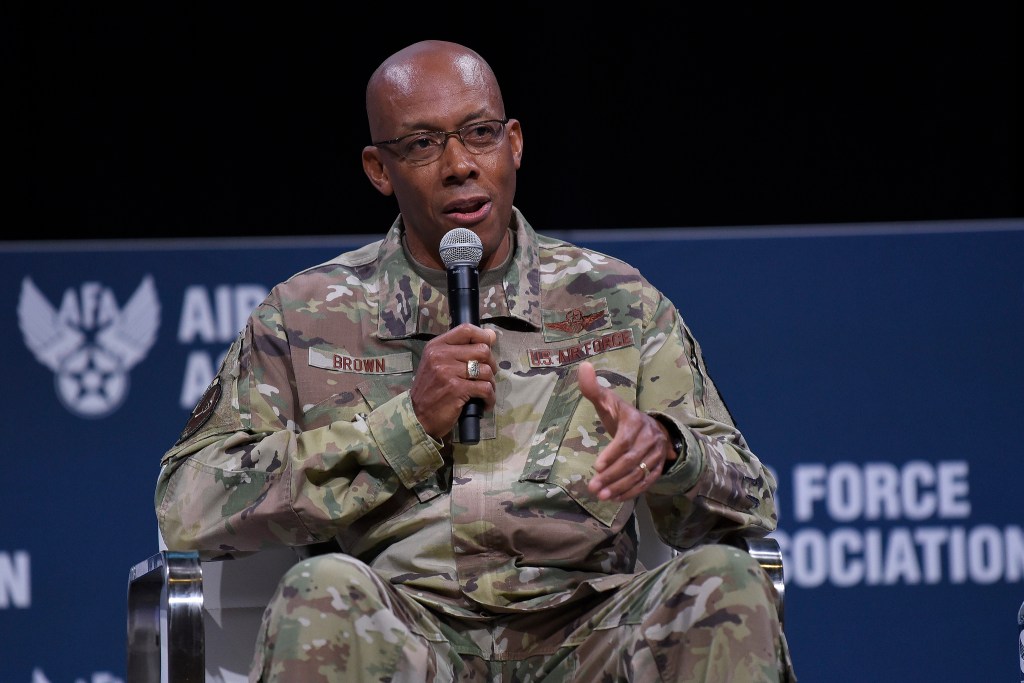
General Charles Q. Brown Jr., commander of Pacific Air Forces, has been nominated to be the 22nd Chief of Staff of the Air Force, Defense Secretary Mark Esper announced March 2, confirming Air Force Magazine’s earlier report. Brown will succeed Gen. David Goldfein, whose tenure ends June 30.
If confirmed, Brown would be the first African American to serve as Chief of Staff of any of the U.S. Armed Forces. The only other African American to serve on the Joint Chiefs of Staff was Army Gen. Colin Powell, who was Chairman from 1989-1993.
The coming nomination was widely, but unofficially, discussed last week during AFA’s Air Warfare Symposium in Orlando, Fla. Several senior leaders referred to it as “the worst-kept secret in the Air Force.” Sources reported that the other leading candidate for the job was Gen. Jeffrey Harrigian, commander of U.S. Air Forces in Europe-Air Forces Africa.

This photograph shows two F-102 Delta Daggers on the Hawaii Air National Guard flightline in 1965. Aircraft 54-1372 was part of “A” Flight (red tail flash), while the unidentified aircraft in the background was part of “C” Flight (yellow tail flash).
The 199th Fighter Squadron flew the F-102A from 1960 to 1976. More about the F-102 Delta Dagger

You may have noticed there’s a pattern in U.S. Army helicopter names – Apache, Black Hawk, Chinook and others. These crucial aircraft are all named after Native American tribes or figures.
But have you ever wondered why?
From the Frolic Hawaii website

I work primarily out of my car. Be it a conference call, email or business proposal, all are usually done while I’m parked somewhere quiet under a tree. With my car doubling as my breakfast table as well, it’s important that meals not only be delicious, but also easy to eat while driving.
The humble breakfast burrito fills this role nicely. While I’ve tried 10 establishments, I find myself craving and going back for only two. Packed with flavor and swaddled in a soft flour tortilla, these are my favorite breakfast burritos.
From the U.S. News & World Report website

Take care of your heart – before you have a scare. “Waiting for the symptoms sometimes can be treacherous,” says Dr. Clyde Yancy, chief of cardiology at Northwestern University Feinberg School of Medicine.
With sudden cardiac arrest, collapse and even death can occur immediately when the heart unexpectedly stops beating. While clinicians emphasize that recognizing symptoms of heart attack or other cardiac problems can be lifesaving, the focus should be on preventing a heart attack in the first place.

Nearly every four years, we add an extra day to the calendar in the form of February 29, also known as Leap Day. Put simply, these additional 24 hours are built into the calendar to ensure that it stays in line with the Earth’s movement around the Sun. While the modern calendar contains 365 days, the actual time it takes for Earth to orbit its star is slightly longer—roughly 365.2421 days. The difference might seem negligible, but over decades and centuries that missing quarter of a day per year can add up. To ensure consistency with the true astronomical year, it is necessary to periodically add in an extra day to make up the lost time and get the calendar back in synch with the heavens.
From The Washington Post website

My pager emits the same urgent beep no matter the occasion. That afternoon, it was the local preoperative clinic to say my 80-something patient, Lily, had been given an electrocardiogram (EKG) “just to be safe” before a minor office procedure.
The EKG was a little off, the page went on. Could I take a look? Lily (I’m identifying her by only her first name at her request) felt fine. No chest pain. No trouble breathing. But now that the irregularity was out there, the procedure would be delayed until we had answers.
From the This Day in Aviation website

The President of the United States of America, in the name of Congress, takes pride in presenting the Medal of Honor (Posthumously) to
BRIGADIER GENERAL (AIR CORPS) FREDERICK WALKER CASTLE
UNITED STATES ARMY AIR FORCES,
for service as set forth in the following:
CITATION:
“For conspicuous gallantry and intrepidity in action above and beyond the call of duty while serving with the 487th Bombardment Group (H), 4th Bombardment Wing, Eighth Air Force.
Brigadier General Castle was air commander and leader of more than 2,000 heavy bombers in a strike against German airfields on 24 December 1944. En route to the target, the failure of one engine forced him to relinquish his place at the head of the formation. In order not to endanger friendly troops on the ground below, he refused to jettison his bombs to gain speed maneuverability. His lagging, unescorted aircraft became the target of numerous enemy fighters which ripped the left wing with cannon shells, set the oxygen system afire, and wounded two members of the crew. Repeated attacks started fires in two engines, leaving the Flying Fortress in imminent danger of exploding. Realizing the hopelessness of the situation, the bail-out order was given. Without regard for his personal safety he gallantly remained alone at the controls to afford all other crewmembers an opportunity to escape. Still another attack exploded gasoline tanks in the right wing, and the bomber plunged earthward, carrying General Castle to his death. His intrepidity and willing sacrifice of his life to save members of the crew were in keeping with the highest traditions of the military service.”
/s/ HARRY S. TRUMAN
War Department, General Orders No. 22 (February 28, 1946)
Merced Army Airfield in Merced, California, was renamed Castle Field in honor of Brigadier General Castle on January 17, 1946. With the establishment of an independent U.S. Air Force in 1947, it was renamed Castle Air Force Base and served through most of its existence as a Strategic Air Command bomber base. Castle AFB was closed September 30, 1995 due to a 1991 Base Realignment and Closure Commission (BRAC) decision and is currently known as Castle Airport Aviation and Development Center. The collocated Castle Air Museum also retains Brigadier General Castle’s name.