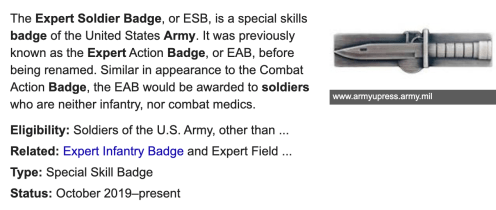
The U.S. Army recently recognized 11 soldiers for helping create the Expert Soldier Badge, or ESB, test program by awarding them the service’s newest skill badge.
The soldiers who received the new badge were part of an initial group of 56 who participated in a 2017 pilot test, designed to be equivalent to the Army’s prestigious Expert Infantry Badge and Expert Field Medical Badge tests.

U.S. economic growth has been underwhelming for some time, averaging around 2% these days. In recent months, economic commentators have intensified their search for the underlying reason why the economy can’t kick into higher gear. They’ve landed on this highly disputable explanation: Too many old people.
That’s right. The dreaded “silver tsunami.” The economic core of the fear-based narrative is that — with more Americans expected to be 65 and older than 18 and younger by 2035 — there’ll be too few young workers to financially support too many dependent elders. Consequently, these analysts say, the U.S. economy is condemned to a permanent state of stagnant growth at best, and possibly much worse.

From the Wired Magazine website
Here on Earth, our sleep is synchronized with the sun. Our bodies stir at daybreak and slump at nightfall, the light acting like a metronome for our delicate body clocks. This biochemical ebb and flow is known as our circadian rhythm, and it repeats every 24 hours.
Go into space, though, and you get a sunrise or a sunset approximately every 45 minutes. Astronauts on the International Space Station loop around our planet so fast it creates a cycle of light and dark that’s disruptive enough to an astronaut’s biorhythms to send them teetering into insomnia or exhaustion.
From the Images of Old Hawaii website
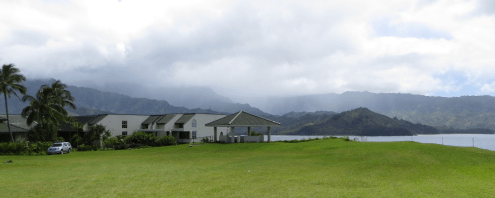
When we think of Russia’s interest in Hawai‘i, we initially (and, typically, only) think of what we refer to as “Russian Fort Elizabeth” in Waimea, Kauai. However, Hawai‘i’s interactions with Russia go well beyond that, yet only short-lived. (And, it really wasn’t a Russian fort.)
In the early-1800s, multiple foreign interests, including Russia, were developing trading relationships with Hawai‘i. Hawai‘i served as an important provisioning site for traders, whalers and others crossing the Pacific.
The Russian story starts when three-masted Behring wrecked on the shores of Kauai’s Waimea Bay early on the morning of January 31, 1815. The Behring had a load of seal skins/otter pelts bound for the Russian-American Trading Company in Sitka, Alaska.
From the Everyday Health website
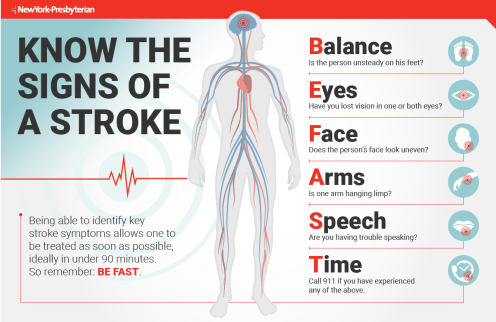
New findings from a long-term cohort study show that the incidence of stroke in the United States over the past 30 years continues to drop in people age 65 and over. The research, published online in September 2019 in JAMA Neurology, found that the consistent reduction of stroke that began in the late 1980s has continued from the years 2011 through 2017 for both men and women and in black and white individuals.
“This latest report demonstrates that we continue to make significant headway in reducing the risk of first stroke in the general population,” says Eugene L. Scharf, MD, a neurologist at the Mayo Clinic in Rochester, Minnesota, who was not involved with this paper. “Those of us in the stroke community are very excited by this news because it shows us that what we do every day in regard to stroke prevention and treatment matters and, even more important, is having an effect.”
Don’t worry still under-control 🎻 pic.twitter.com/qYIiDZ525y
— Aviationdaily✈️الطيران يوميآ (@Aviationdailyy) March 6, 2019

After you’ve spent decades diverting a healthy stash of cash to your tax-advantaged retirement accounts, you need to start withdrawing a chunk of it each year once you turn 70½. But if you’re fortunate enough to be living comfortably off a pension, Social Security or other savings, the income from your required minimum distribution—and the tax bill that follows—may be more hindrance than help.
Your RMDs are based on the balance in your accounts as of December 31 of the previous year, divided by a life expectancy factor based on your age. Most people use the Uniform Lifetime table, Table III, in Appendix B of IRS Publication 590-B, available at irs.gov. The deadline to take your annual RMD is usually December 31, but you have until April 1 of the year after you turn 70½ to take your first required withdrawal. (The Secure Act, currently pending in Congress, would increase the starting age to 72 for RMDs from retirement accounts.) You’ll pay a hefty penalty—50% of the amount you should have withdrawn—if you forgo or delay your RMD past the deadline.

This recent photograph shows two Hawaii Air National Guard retirees: Charles Kaulukukui and Elmer Looney.
Charles served many years in the then-169th Aircraft Control & Warning Squadron before retiring.
Elmer served his entire career in the 201st Combat Communications Group. Elmer’s son, Prescott, was a member of the KC-135 maintenance team before transferring to the Arizona Air National Guard.
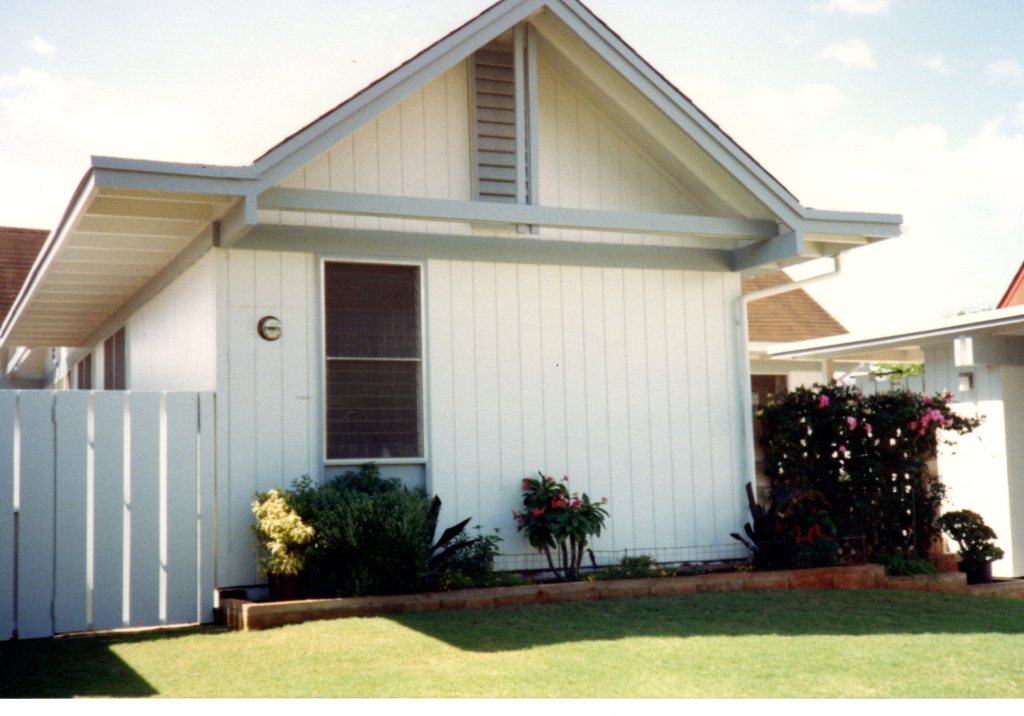
If you’re nearing retirement, it’s likely that renting is a distant memory. But if your retirement plan includes making a move, renting might be a sweeter financial and lifestyle fit.
Among households with someone at least 65 years old, 8 in 10 are homeowners, according to Harvard’s Joint Center for Housing Studies. Yet retirement sometimes calls for flexibility, whether that’s the ability to downsize in your current location, relocate to be closer to the kids and grandkids, or chase better weather and/or a lower cost of living in another state. And these moves become harder if they necessitate putting your home on the market.
From the Everyday Health website

One measure of your diabetes management is your A1C test result. You may have heard this number at diagnosis or during visits with your healthcare provider. So exactly what does this number mean, and what should you consider in setting your own A1C goal?
“A1C is a marker of the average blood sugar in the previous three months,” explains Samar Hafida, MD, an endocrinologist at Joslin Diabetes Center in Boston. “It measures the big picture of what’s going on,” she says.

While doing some research on the internet, we ran across this photograph of someone who looked like Scott Hoadley. We emailed him for his comments provided below:
Yes indeed, that is a younger me. That pic was taken over in Barking Sands around 1985 or so. We used to deploy there to simulate a deployment to Guam which was in our OPLAN should we need to provide forward staging air defense in the region. We would launch from there and provide blue force assets against red force launching from Hickam.
The thing I most remember is the abbreviated runway, about 6k long. There was a Marine detachment that operated the arresting gear and we would take the cable every time. Basically a carrier landing.
Taking off was also sporty. We would launch with a reduced fuel load in order to get airborne before we ran out of runway. I recall lots of kiawe bush filling the side views as we were getting wheels in the well, hoping we had the little Phantom that could!
There was always a stellar luau after the exercise (mahalo Saigon). Those were the days.
Scott was a Weapons Systems Officer during the F-4 Phantom era. He continued his services as a weapons controller until his retirement.

You know you should have a will, but you keep stalling. No one likes to think about dying or about someone else raising their children. But if you get no further than scribbling notes or thinking about which lawyer to hire, you risk dying “intestate” — without a will that could guide your loved ones, head off family feuds and potentially save your family thousands of dollars.
Financial planners say getting people to stop procrastinating on this important money chore can be tough. I asked several advisors to offer their best strategies for getting clients to get this done. Maybe one of these will help you.

When you hear the word diet, you might think only of weight loss. But a lifestyle diet can bring even greater benefits.
One option that belongs on your radar is the MIND diet created by researchers at Rush University in Chicago.
MIND stands for Mediterranean-DASH Intervention for Neurodegenerative Delay. It’s a hybrid of those two heart-healthy diets, both of which reduce the risk of high blood pressure, diabetes, heart attack and stroke.