Having kids can enrich your life in many ways, but unfortunately children don’t generally make you financially richer. In fact, many parents compromise their own savings and face more challenges supporting themselves during retirement because of the financial demands children place upon them.
You want to help your children succeed, but doing so at the expense of your own financial security can have disastrous results. To make sure you don’t find yourself running short of savings because of money given to your children, take these key steps to childproof your retirement.
From the Everyday Health website
For years, cardiologists have been encouraging people to eat more fish with omega-3 fatty acids as a way to boost cardiovascular health.

Now, an article published in August 2019 in the AHA journal Circulation further validates the benefits of these acids, finding that prescription fish oil medication lowers triglyceride levels by 20 to 30 percent in patients who already require triglyceride-reducing drugs.

This photograph was taken on June 23, 1921 by the 5th Group (Observation). Although not seen in the photograph, there was military activity around the crater in an area know as Fort Ruger.
Fort Ruger is a fort on the island of Oʻahu that served as the first military reservation in the Territory of Hawaii. Named after Civil War General Thomas H. Ruger and built in and around Diamond Head Crater, the fort was established by the United States for the purpose of defending the harbor of its newly annexed territory. The fort was established in 1906 as Diamond Head Reservation and renamed Fort Ruger in 1909.
The 5th Operations Group’s history dates back more than eight decades to the infancy of military aviation. It originally activated as the 2nd Group (Observation) 15 August 1919, at Luke Field in the Territory of Hawaii. In 1921, the group was redesignated the 5th Group (Observation). A year later, it became the 5th Group (Pursuit and Bombardment) with its crews flying DeHaviland DH-4 aircraft. (Wikipedia)
After putting in decades of hard work, we naturally expect to have financial security in our golden years. But not all Americans can look forward to a relaxing retirement. According to the Employee Benefit Research Institute’s 2019 Retirement Confidence Survey, two in three workers reported feeling at least somewhat confident that they will have enough money to retire comfortably, but only 23 percent said they were “very confident.”
If so many American workers are worried about their financial future, what other options provide a pathway to a comfortable retirement? For some, the only solution is to keep working. According to Gallup polling, workers in 2019 plan to retire at age 65 on average, compared to age 60 in 1995. The alternative? Relocate to an area where you can stretch your dollar without sacrificing your lifestyle.
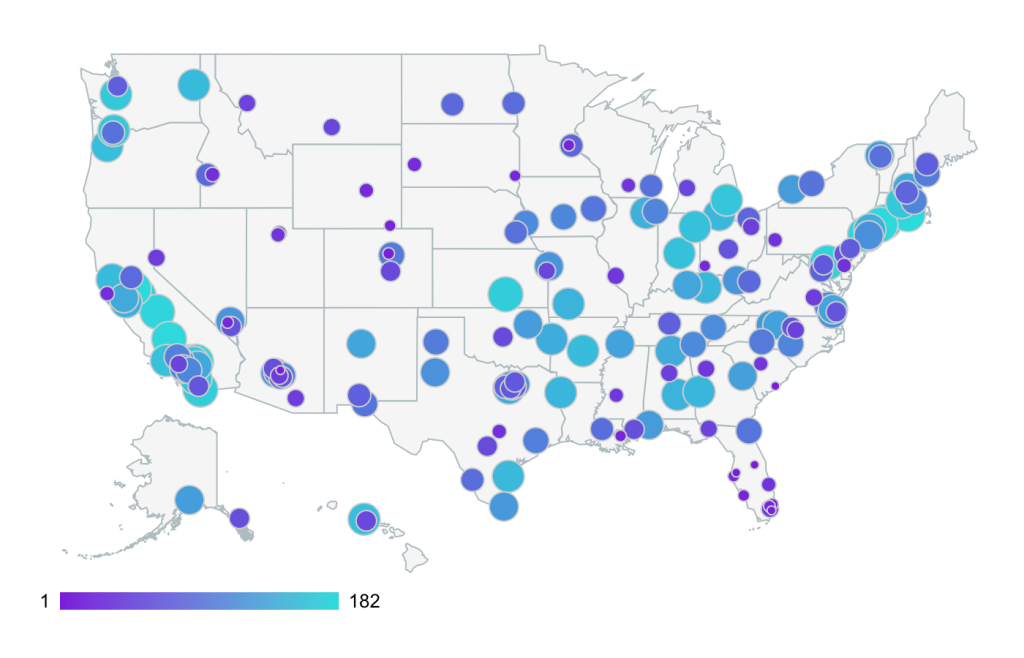
To help Americans plan an affordable retirement while maintaining the best quality of life, WalletHub compared the retiree-friendliness of more than 180 U.S. cities across 46 key metrics. Our data set ranges from cost of living to retired taxpayer-friendliness to availability of recreational activities. Read on for our findings, expert retirement advice and a full description of our methodology.

Recovering from money mistakes is easy when you’re young. Your 60s, however, are a different story: when it comes time to start divvying up your nest egg, making poor decisions can prove costly.
Financial planning is important at all stages in life, but it takes center stage as you near retirement. Between deciding when to start taking social security, figuring out health insurance and managing your investments, making the right choices will help ensure that you and your family are properly cared for.
From the Images of Old Hawaii website
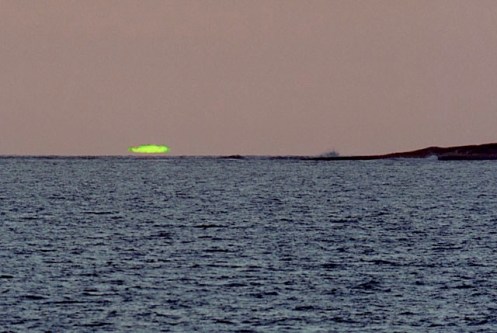
As the sun sinks slowly in the West, there is cause for pause by people as they wish their luck in seeing the elusive “green flash.” I remember the daily ritual on our deck in Kahaluʻu mauka in Kona (as we were growing up, it was the only home we ever lived in with a western orientation and view of the Pacific Ocean.) Scientists say “at the moment of the departure of the sun below the horizon, the last glimpse is coloured bluish green.”

When disaster strikes, your immediate concern will be your safety and the safety of those you care about. Once the immediate danger passes, however, having your financial and medical records and important contact information will be crucial to help you start the recovery process quickly.
Taking time now to safeguard these critical documents will give you peace of mind, ensure you have access to essential medical and prescription information, and help you avoid additional stress during the difficult days following a disaster.
In addition, take the time now to think about the priceless personal items you would want to protect from damage or take with you if you had to suddenly evacuate your home.
The first step is to take an inventory of your household documents, contacts, and valuables. The checklist below will get you started.

Small, lasting changes in cholesterol and blood pressure levels can dramatically reduce the risk of heart disease and strokes over a lifetime, new research suggests.
The large study found that a combination of a drop in LDL cholesterol (the bad type) of 14 mg/dL and a 5 mm Hg drop in systolic blood pressure (the top number in a blood pressure reading) cut the lifetime risk of heart disease and stroke in half.
Off the Hawaii Air National Guard Facebook page

There’s nothing that generates excellence quite like a friendly competition! Teams of Airmen from the 154th Maintenance Group and their Active Duty counterparts from the 15th Wing gathered for a weapons load competition on drill weekend. While only one group took on the title of champion, all participants proved they can rely on teamwork, work under pressure and arm the Hawaiian Raptors in no-time!
From the Washington Post website
I recently used my credit card to buy a banana. Then I tried to figure out how my credit card let companies buy me.

You might think my 29-cent swipe at Target would be just between me and my bank. Heavens, no. My banana generated data that’s probably worth more than the banana itself. It ended up with marketers, Target, Amazon, Google and hedge funds, to name a few.
I recently used my credit card to buy a banana. Then I tried to figure out how my credit card let companies buy me.
You might think my 29-cent swipe at Target would be just between me and my bank. Heavens, no. My banana generated data that’s probably worth more than the banana itself. It ended up with marketers, Target, Amazon, Google and hedge funds, to name a few.
Oh, the places a banana will go in the sprawling card-data economy. Despite a federal privacy law covering cards, I found that six types of businesses could mine and share elements of my purchase, multiplied untold times by other companies they might have passed it to. Credit cards are a spy in your wallet — and it’s time that we add privacy, alongside rewards and rates, to how we evaluate them.

One small device can make a big difference in the lives of older people, but few of them get the helpful gadget, a new study suggests.
People age 66 and older who got a hearing aid shortly after being diagnosed with hearing loss were less likely to receive a first-time diagnosis of dementia or depression, or be injured by a fall, in the following three years, a study published Thursday by the Journal of the American Geriatrics Society found.

Being a grandparent often means passing along traditions, making memories and building family bonds. But this isn’t the reality for many families, especially those affected by estrangement.
It’s difficult to say exactly how many parents are estranged from their adult children, but experts agree that when grandchildren are involved, the situation grows even more complex.
But if you can’t repair the relationship with their parents, it still may be possible to build and maintain relationships with your grandchild, despite the estrangement. Experts say it will just take time, emotional intelligence, respecting boundaries and setting realistic expectations.

In a very special episode of “things you didn’t know,” Team Mighty decided to give a shout-out to the youngest branch of the U.S. military and fill in the blanks to help people, civilians and non-airmen alike, learn a few things about those who live in fame or go down in flame.
Note: some of the items are not completely true.