
Special Thanks to Kenji Sumida who registered to “Follow Blog via Email” last week.
You can register to receive an email every time there is a new post. In the “Follow Blog via Email” section and press “Follow”. On the next screen, enter your email address and press ENTER. Shortly, you will receive a confirmation email to your address from WordPress.com. You acknowledge the email and you are a registered reader.
After you compete this short registration process, you get a notification email every time there is a new posting. The email has a quick teaser of the posting, along with tags that indicate how the posting relates to special topics/areas.

History has shown that a lack of hurricane awareness and preparations are common threads among all major hurricane disasters. By knowing what actions to take, individuals and communities can reduce the effects of a hurricane disaster. Hurricane hazards come in many forms and it is important to know the terms that the National Weather Service uses for watches and warnings. For more information, visit www.ready.gov/hurricanes and follow Ready on Twitter and Facebook.
Hurricane Seasons
– Atlantic – June 1 to November 30 – East Pacific – May 15 to November 30– Central Pacific (Hawaii) – June 1 to November 30
Hurricanes, Cyclones and Storms
– Tropical Cyclone: A warm-core non-frontal synoptic-scale cyclone, originating over tropical or subtropical waters, with organized deep convection and a closed surface wind circulation about a well-defined center. – Tropical Depression: A tropical cyclone in which the maximum sustained surface wind speed (using the U.S. 1-minute average) is 38 mph (33 knot) or less. – Tropical Storm: A tropical cyclone in which the maximum sustained surface wind speed (using the U.S. 1-minute average) ranges from 39 mph (34 knots) to 73 mph (63 knots).– Hurricane: A tropical cyclone in which the maximum sustained surface wind (using the U.S. 1-minute average) is 74 mph (64 knots) or more.
Watches vs. Warnings
– Hurricane Watch: An announcement that hurricane conditions (sustained winds of 74 mph or higher) are possible within the specified area. Because hurricane preparedness activities become difficult once winds reach tropical storm force, the hurricane watch is issued 48 hours in advance of the anticipated onset of tropical-storm-force winds. – Hurricane Warning: An announcement that hurricane conditions (sustained winds of 74 mph or higher) are expected somewhere within the specified area. Because hurricane preparedness activities become difficult once winds reach tropical storm force, the hurricane warning is issued 36 hours in advance of the anticipated onset of tropical-storm-force winds. – Tropical Storm Watch: An announcement that tropical storm conditions (sustained winds of 39 to 73 mph) are possible within the specified area within 48 hours.– Tropical Storm Warning: An announcement that tropical storm conditions (sustained winds of 39 to 73 mph) are expected somewhere within the specified area within 36 hours.
Know the Hurricane Hazards
– Storm Surge: Storm Surge is the greatest potential for large loss of life associated with a hurricane. Storm surge is the water rise generated by a storm, over and above the predicted astronomical tides. Storm tide is the combination of storm surge and the astronomical tide. Storm tide can cause extreme flooding in coastal areas particularly when storm surge coincides with normal high tide, resulting in storm tides reaching up to 20 feet or more in some cases. – Heavy Rainfall and Inland Flooding: Tropical cyclones often produce widespread, torrential rains, which may result in deadly and destructive floods. In fact, flooding is the major threat from tropical cyclones for people living inland. – High Winds: High Winds: Hurricane-force winds, 74 mph or more, can destroy buildings and mobile homes. Debris, such as signs, roofing material, siding and small items left outside can become flying missiles during hurricanes and tropical storms. Winds can stay above hurricane strength well inland. – Tornadoes: Hurricanes and tropical storms can produce tornadoes. These tornadoes most often occur in thunderstorms embedded in rain bands well away from the center of the hurricane.– Rip Currents: The strong winds of a tropical cyclone can cause dangerous waves that pose a significant hazard to mariners and coastal residents and visitors. When the waves break along the coast, they can produce deadly rip currents – even at large distances from the storm.
Taken from the FEMA External Affairs Bulletin, week of August 11, 2014.
Please note that here in Hawai‘i, we need to stock water and supplies for at least 7-10 days. Most government websites recommend 3 days, and that is a reasonable supply if you live on the continental United States. Hawai‘i remains dependent on container ships that take 7 days to get to Hawai‘i from Oakland or Los Angeles.
For meat-lovers, “vegan” is a dirty five-letter-word. But while the diet may be too extreme for many, there are some sensible, healthy vegan habits that we all should be copying — carnivores included.
Getting an electric-powered mobility scooter or wheelchair that’s covered by original Medicare starts with a visit to your doctor’s office.
Continue reading http://ow.ly/C0PTi
Bernard B.C. Kim, of Wahiawā, passed away September 10, 2014 in Wahiawā. Born February 24, 1931 in Honolulu. An active choir member & parishioner of Our Lady of Sorrows Catholic Church, Wahiawā. A retired Master Sergeant from the Hawai‘i Air National Guard and the Royal Hawaiian Hotel. He is survived by wife, Juliana B. Kim; sons, Alan Kim, David Kim, Jason (Pearly) Kim; daughters, Kathryn (Derek) Katakura, Sandra Kim; brothers, Donald Kim, Albert Kim; sister, Bertha Sakumoto; 5 grand- children; 6 great-grandchildren.
For those who plan to attend the Blue Angels performance at Joint Base Pearl Harbor-Hickam this weekend. The Department of Transportation issued the following press release concerning the closing of the H-1 Freeway Airport Viaduct. Plan for additional travel time to JBPHH to insure you arrive on time.
HONOLULU – The state Department of Transportation (DOT) reminds Oahu motorists of ongoing H-1 Freeway Airport Viaduct Deck Repair Project roadwork in the westbound direction 24/7 this weekend. This may affect westbound drivers traveling to Joint Base Pearl Harbor Hickam for the Blue Angels Pacific Air show, which will take place Saturday, September 27 and Sunday, September 28, from 10 a.m. to 5:30 p.m., daily. The suggested alternate route is H201 Moanalua Freeway.
Lane closures this weekend are as follows:
Right lane closures on the H-1 Freeway in the westbound direction between the Keehi Interchange and the Hickam Off-Ramp (Exit 15B) from 9 p.m. on Friday night, September 26, though 12 a.m., Monday, September 29, for deck repairs on the Airport Viaduct. All ramps to and from the airport will remain open.
Lane closures on Nimitz Highway in the westbound direction between Aolele Street and Elliott Street from 9 p.m. on Friday night, September 26, through 12 a.m., Monday, September 29 due to deck repairs happening above on the Airport Viaduct. Motorists are reminded that although there is no work being done on Nimitz Highway, these closures ensure the safety of motorists as hydro-demolition work is taking place above.
Speed limits will be reduced to 15 mph through the work zone area in order to reduce traffic induced vibrations that may lead to cracking in the newly repaired deck. In addition, this reduced speed ensures the safety of both motorists and construction crews working on the viaduct.
The H1 Freeway Airport Viaduct Project will repair approximately 94,000 square feet of concrete deck repairs. Weakened portions will be removed and replaced with a fast-setting concrete, and sealed with a concrete overlay. Roadwork also includes expansion joint repairs and pavement striping. The project, consisting primarily of weekend work, will preserve and prolong the life of the Airport Viaduct.
The DOT urges drivers to allow for extra travel time to Joint Base Pearl Harbor Hickam if they are traveling on the H1 Freeway Airport Viaduct, and to drive slowly and safely through the work zone area.
Lane closure information will be distributed to the media, will be available on the HDOT website at http://www.hidot.hawaii.gov, and will be released through our social media channels on Facebook and Twitter. Please follow us for the latest information, #hitraffic, #WZAM
With about 10 million new iPhone 6s ordered in the initial days on the market, a whole lot of old iPhones are destined for the scrap heap. Sure, you could sell, donate or recycle your old iPhone, but you probably won’t. And there are better things to do with it. “You’re only really limited by your imagination,” says Josh Smith, editor of GottaBeMobile.com.
Read more http://ow.ly/BSHPg
Little snacks may seem harmless, but they can amount to a surprising number of calories, causing weight gain.
It’s hard enough to restore your identity when a thief steals your Social Security number and uses it to open bank accounts and obtain loans in your name. But there’s now a more complicated form of identity theft that could really cause you headaches.
Continue reading http://tinyurl.com/ltnfh7a

Brigadier General Braden K. Sakai, Commander 154th Wing, request the pleasure of your company for a Retirement Ceremony honoring Master Sergeant Glenda N. Buis.
Date: Sunday, October 5, 2014 Time: 1500 Ceremony Reception to follow Place: 154th Wing Dining FacilityJoint Base Pearl Harbor-Hickam
Please RSVP using the following link: http://ow.ly/BowV1
R.S.V.P. by September 26, 2014 POC: Capt Macie Akana 808-448-7270 Alt POC: TSgt Pi’i Reyes 808-448-7253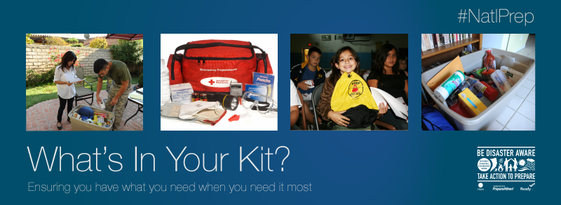
An emergency or disaster supplies kit is simply a collection of basic items your household may need in the event of an emergency.
Try to assemble your kit well in advance of an emergency. You may have to evacuate at a moment’s notice and take essentials with you. You will probably not have time to search for the supplies you need or shop for them.
You may need to survive on your own after an emergency. Local officials and relief workers will be on the scene after a disaster, but they cannot reach everyone immediately. You could get help in hours or it might take days. Additionally, basic services such as electricity, gas, water, sewage treatment and telephones may be cut off for days or even a week, or longer. This means having your own food, water and other supplies in sufficient quantity to last for 7-10 days.
Your supplies kit should contain items to help you manage during these outages. Include items that you may use every day to live independently such as prescription medicines, diabetic supplies, food for special diets, hearing aids and batteries, durable medical equipment and other assistive technology devices, and consumable medical supplies.
No idea where or how to start building your kit? Don’t worry. We have you covered. Download our recommended list of supplies to get you started! http://ow.ly/BPxOx
Please note that here in Hawai‘i, we need to stock water and supplies for at least 7-10 days. Most government websites recommend 3 days, and that is a reasonable supply if you live on the continental United States. Hawai‘i remains dependent on container ships that take 7 days to get to Hawai‘i from Oakland or Los Angeles.
Advice from personal finance bloggers about how to find the best deals on hotels, flights and more.
Eating certain vegetables just once a week could significantly lower your risk of several cancers.


Do Brain Games Really Work?
Dr. Keith Black weighs in on how brain games have become popular over the past few years and whether they can truly improve your brain health.
Find out if brain games help improve memory.