The U.S. Air Force accepted the first F-15EX, the service’s newest fighter, from the Boeing Co. Wednesday at the company’s St. Louis facility, the Air Force Life Cycle Management Center (AFLCMC) said Thursday.
Wright-Patterson Air Force Base personnel and area contractors have been part of the team overseeing and developing the new jet, which celebrated its first flight last month above St. Louis Lambert International Airport. AFLCMC is based at Wright-Patterson.

The Kūkā‘ilimoku is the official e-newsletter of the 154th Wing, Hawai’i Air National Guard. The first issue came in September 1957 and continues as a monthly newsletter today.
Today we feature the March 1976 Kūkā‘ilimoku issue. This issue includes the following stories:
* 199th Weather Flight training
* 154th Civil Engineering Flight deploying
* 154th Supply Squardon Happenings
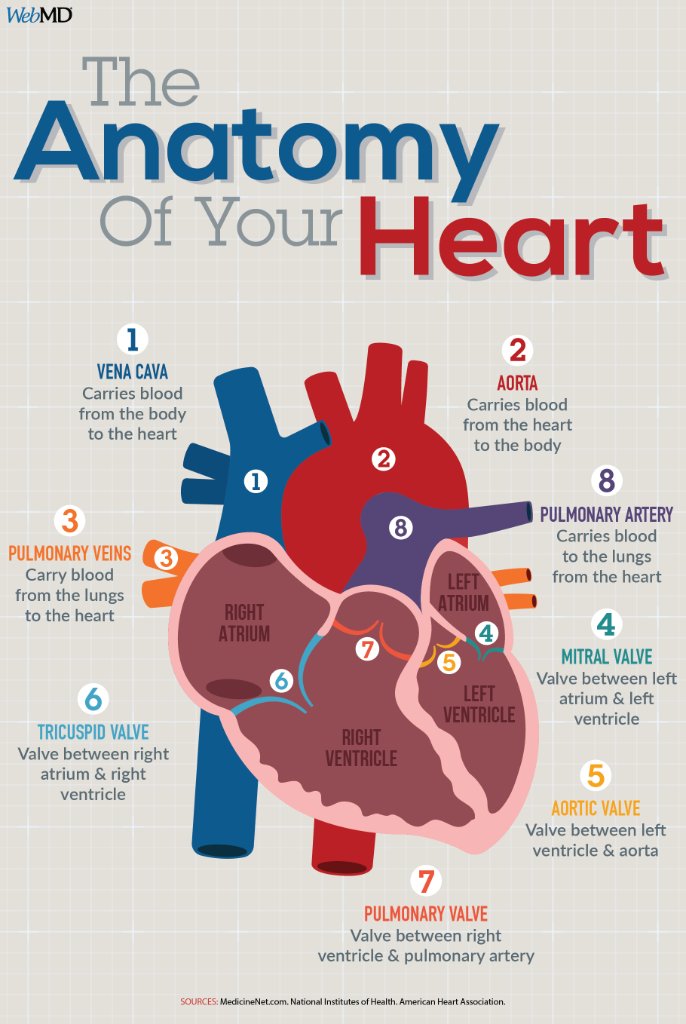
The heart is an amazing organ. It pumps oxygen and nutrient-rich blood throughout your body to sustain life. This fist-sized powerhouse beats (expands and contracts) 100,000 times per day, pumping five or six quarts of blood each minute, or about 2,000 gallons per day.
Your heart is a key part of your cardiovascular system, which also includes all your blood vessels that carry blood from the heart to the body and then back to the heart.

Neil Walter posted this on the Remember Oahu from the Past Facebook page
Neil Walter’s comments that accompanied the photograph:
My Dad (Don Walker) flew for HANG out of Hickam at that time. I was very young but I loved visiting the base. Yeah! Dad flew the F-102 and he was bummed out that he retired one year before they got the F-4’s.
This undated photograph was taken in the early 1960s. It appears it looks Mauka from the second floor (Operations) of Building 3400. The aircraft with the tail facing left is in the radar dock. The Deuces still had “Hawaii Air Guard” markings and still did not have the round Air Guard logos and the flight color stripes on the tails. Additionally, the bern around the tarmac is not there.

This photograph provides more references for the one above.

The Kūkā‘ilimoku is the official e-newsletter of the 154th Wing, Hawaii Air National Guard. The first issue came in September 1957 and continues as an e-newsletter today.
Today we feature the March 1992 Kūkā‘ilimoku issue. This issue includes the following stories:
* Prime BEEF/Prime RIBS Exercise
* UPT applications being accepted: who was selected in this class?
* CAMS News & Views: lots of familiar names
* Sports News

While most travelers are putting their international trips on hold until the pandemic is over, there are those who need – or choose – to move across borders. With recent travel rules put in place, we’re here to help.
You can use our interactive Travel Restrictions map to stay up-to-date on country and state-level restrictions. But to help you navigate the new international rules recently put into place, we’re breaking down what you need to know.

From the Medical News Today website
Blood oxygen level is the amount of oxygen circulating in the blood. Most of the oxygen is carried by red blood cells, which collect oxygen from the lungs and deliver it to all parts of the body.
The body closely monitors blood oxygen levels to keep them within a specific range, so that there is enough oxygen for the needs of every cell in the body.
A person’s blood oxygen level is an indicator of how well the body distributes oxygen from the lungs to the cells, and it can be important for people’s health.

From the Frolic Hawaii website
In cool weather, our thoughts turn to warm jook or chazuke or caldoso or arroz caldo—pick your country for its rendition of the most comforting of comfort foods. Of course, you can always make rice porridge at home, but here are some of our favorite bowls that offer a taste of the world.

The Fall/Winter 2020/2021 edition of the Afterburner, Newsletter for Department of the Air Force Retired Personnel, is now available online.
The newsletter can be viewed by visiting the Air Force Retiree Services website. To do so, copy or type the following address into a new browser window:
https://www.retirees.af.mil/Library/Afterburner/
Scroll down and the new edition is under the banner for 2020. An archive of current and past issues are on the same webpage.
Several Retiree News readers asked about the sources for the medical posts. Generally, our medial posts come from three websites – Medical News Today, WebMD, and Everyday Health. We do link Centers for Disease Control and Prevention (CDC) information occasionally. However, CDC articles tend to be directive rather than informative.
Following are quick summaries of each found on their websites.
Medical News Today, part of Healthline Media UK, is one of the fastest growing health information sites in the United States. Every month, more than 70 million people come to Medical News Today for our in-depth health content and the latest news in medical research. Consider us your intellectual peer. We unravel the complexities of health information and make it easy to understand.
We take a deep dive into medical research of the past and present, and we break it down to give you the clear-cut facts. Ultimately, we want you to be confident in making informed health decisions for yourself and your loved ones. Using peer reviewed studies and reputable sources, our knowledgeable and curious editors and writers create more than 250 pieces of content every month. More if you’re interested.
WebMD has created an organization that we believe fulfills the promise of health information on the Internet. We provide credible information, supportive communities, and in-depth reference material about health subjects that matter to you. We are a source for original and timely health information as well as material from well-known content providers.
The WebMD content staff blends award-winning expertise in journalism, content creation, community services, expert commentary, and medical review to give our users a variety of ways to find what they are looking for. More if you’re interested
At Everyday Health, we view wellness through a humanized and personal lens that focuses on one’s physical, emotional, intellectual, and work life.
We know that, today, people are the point of care, which is why we design our content experiences for what we call the Chief Wellness Consumer: mobile-first millennials, desktop boomers, multitasking parents, concerned caregivers, wellness-conscious warriors, and symptom solvers for whom health decisions are multifaceted.
Everyday Health bridges the gap between lifestyle and medical websites by delivering trusted health information and resources along with the stories, tips, tools, and insights of the day’s most influential and compelling voices, role models, and celebrities.

From the National Guard Association of the United States website
Museum Director Anne Armstrong shares the history of the Normandy Helmet, currently on display in the National Guard Memorial Museum in Washington D.C.
The former Adjutant General of Ohio and President of the National Guard Association of the United States, MG Charles W. F. Dick wore this ceremonial bicorn hat at important functions in the late 19th Century. As the Ohio Senator and the architect of the Dick Act of 1903, he cemented his place in history as the father of what would become the Total Force Policy.

From the Task and Purpose website
Richard “Dick” Bong was born in Superior, Wisconsin on Sept 24, 1920. The eldest of nine children, he was raised on a small farm in nearby Poplar and in 1928 fell in love with aviation after a low passing plane buzzed the family home. “I knew then I wanted to be a pilot,” Bong said.
On May 29, 1941, Bong joined the Army Air Corps, enrolling in the Aviation Cadet Program. He was a natural from the start, recalled Capt. Barry Goldwater, (yes, the future United States Senator) who instructed Bong during advanced single-engine pilot training at Luke Field near Phoenix, Arizona. “I taught him fighter gunnery,” Goldwater said. “He was a very bright student. But the most important thing came from a P-38 check pilot who said Bong was the finest natural pilot he ever met. The pilot recalled that he could never prevent Bong from getting on his tail, even though Bong flew an AT-6, a very slow airplane.”
Related article: The Five Deadliest Fighter Pilots in U.S. Military History

From the Everyday Health website
At the end of February, Americans received a new weapon in the fight against the coronavirus when the U.S. Food and Drug Administration (FDA) granted emergency use authorization for a new COVID-19 vaccine, by Johnson & Johnson’s vaccine subsidiary, Janssen.
Just days after this decision, President Joe Biden announced that his Administration had helped forge a historic manufacturing collaboration between Johnson & Johnson (J&J) and one of its competitors, Merck. Under the arrangement, Merck will dedicate two facilities in the United States to making the J&J vaccine.

Lou Ottens, the Dutch engineer who invented the cassette tape and helped develop the compact disc decades later, has died. He was 94. Amsterdam-based news outlet NRC Handelsblad confirmed the news but didn’t provide details.
Working to alleviate the challenge of huge reel-to-reel decks and the portability of recordings, Ottens began working on the audiocassette when he was named head of new-product development for Philips in the early 1960s. He used a pocket-size block of wood as a guide for the cassette’s future size and shape.
Webmaster Comments: For those too young to remember.
Music: first there were vinyl records, then 8-track tapes appeared, followed by cassettes and Walkman players, and then CDs and CD players. Apple started iTunes and the first iPods appeared on October 23, 2001. Apple announced iPhones playing music on January 9, 2007. Ironically, true music aficionados are returning to vinyl records.