
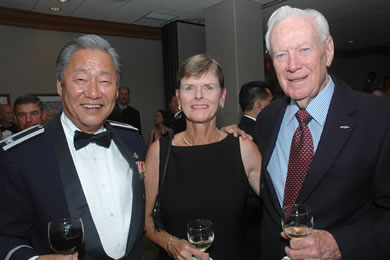
This photograph shows John “Saigon” Lee, Judy and Robert Maguire. They were attending the HIANG 60 Celebration at the Sheraton Waikīkī on September 17, 2006 The event celebrated the Hawai‘i Air National Guard’s Federal Recognition on November 4, 1946. The theme of the HIANG 60 celebration was “A History of Excellence, A Future Unlimited”
Saigon was a fighter pilot with the 199th Fighter Squadron for many years. He was the 154th Composite Group commander when he retired in 1989.
Bob Maguire served since the 1940s and retired in 1976 after serving as the HIANG commander. He passed in 2018. HIs biography
It is unfortunate that there is no HIANG 75 celebration this year.
Lineage. Air Force Instruction 84-105, “The lineages of permanent organizations are continuous. Neither inactivation nor disbandment terminates their lineage or heraldry.” Lineage entails tracing the organizational actions affecting the history of an organization. The official USAF statement of lineage forms the foundation of the organization’s history and governs the organization’s inheritance of emblem and honors.
A basic policy of the Air Force is that each organization will have a unique lineage. This policy was in effect in the War Department when military aviation was under the Army and has been continued by the United States Air Force since its inception in 1947.
No two organizations can have the same lineage, although at different times in their existence they may have possessed similar or even identical designations. A description of the lineage system may be found in Air Force Instruction 38-101 “Air Force Organization.”
October 5, 1944: Constituted as the 464th Fighter Squadron
October 12, 1944: 464th Fighter Squadron activated
May 27, 1946: 464th Fighter Squadron inactivated

May 24, 1946: Redesignated as the 199th Fighter Squadron, and allotted to the National Guard
November 4, 1946: 199th Fighter Squadron received Federal Recognition and activated. Other units activated
199th Utility Flight
Detachment C, 199th Air Service Group (Ftr)
199th Weather Station (Type A)
July 15, 1952: Redesignated as the 199th Fighter-Bomber Squadron
November 19, 1952: Redesignated as the 199th Fighter Interceptor Squadron
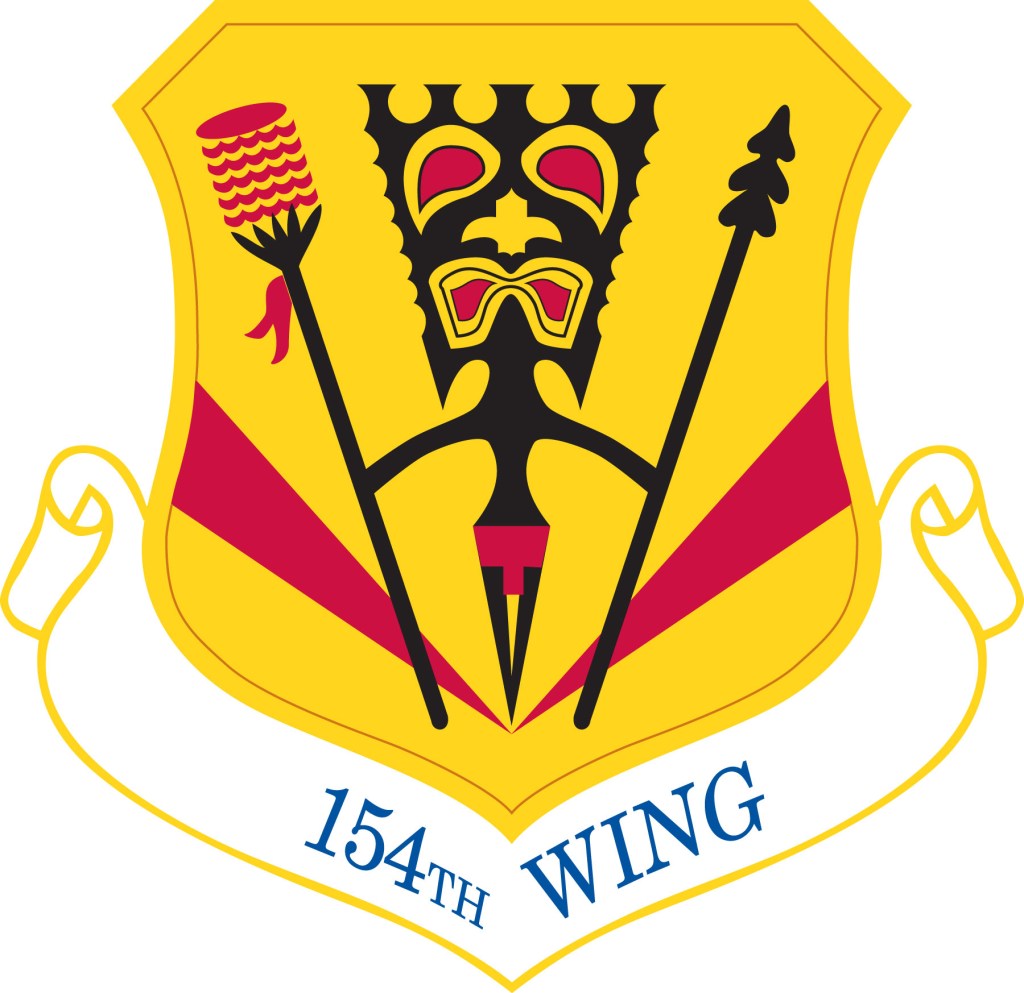
December 1, 1960: the 199th Fighter Squadron was authorized to expand to a group level, and the 154th Fighter-Interceptor Group was established by the National Guard Bureau. The Group received Federal Recognition and activated.
The 199th FIS become the group’s flying squadron. Other squadrons assigned into the group were:
154th Headquarters
154th Material Squadron (Maintenance)
154th Combat Support Squadron
154th USAF Dispensary
June 10, 1976: Re-designated as the 154th Tactical Fighter Group
June 10, 1976: Re-designated as the 199th Tactical Fighter Squadron
November 3, 1978: Re-designated as the 154th Composite Group
March 15, 1992: Re-designated as the 154th Group
March 15, 1992: Re-designated as the 199th Fighter Squadron
October 1, 1995: Status changed from Group to Wing, re-designated as the 154th Wing
Taken from the HANG 25 Booklet, the History of the Hawaii Air National Guard, November 4, 1946 to November 3, 1971

The Hawaii National Guard was re-established following the end of World War 11 by Governor Ingram M. Stainback‘s Executive Order of August 3, 1946. The Governor formally accepted National Guard troop units and strength the following day as recommended by the new Adjutant General, Brigadier General Fred W. Makinney.
Among these were four Army Air Force units with an aggregate authorized strength of 353 personnel: 199th Fighter Squadron (SE); 199th Utility Flight; Detachment C, 199th Air Service Group (Ftr); and the 199th Weather Station (Type A).
These Army Air Force units, new to the Hawaii National Guard, were organized September 10, 1946, by Military Department, Territory of Hawaii, General Order No. 4, with temporary station at the Honolulu Armory.
The first commanding officer of the 199th Fighter Squadron (SE) was Lt Col Walter H. Dillingham, but he resigned because he was actively campaigning for the Territorial Legislature. He was followed by Major William B. Morgan who resigned due to pressure of business. Captain Frank R. Harlocker, the senior officer of the fighter squadron, then assumed command.
By the end of October sufficient personnel had been recruited to meet the minimum requirements for federal recognition. Seventy-four personnel were on the rolls and in the ranks when the units were inspected at 1930 hours, November 4, 1946, by an Army Air Force Inspection Team from Hickam Field.
View the list of personnel who were present at this inspection
General Order 1, 1947 announced Federal Recognition retroactive to November 4, 1946. The certificate above is a National Guard Bureau certificate announcing Federal Recognition under the authority of the Secretary of War.
There was an active recruiting drive of eight weeks duration which commenced on November 11, 1946 and doubled unit strength. Major William F. Nolan assumed command of the 199th Fighter Squadron (SE), December 18, 1946.
Major Leonard S. Marshall arrived in December 1946 to become the first Senior Air Instructor. He was relieved March 31, 1947; Major Gwynne S. Curtis, Jr. temporarily filled this position until the arrival of Col Harold J. Rau on May 29, 1947. Major Chester G. Livingston became Air Officer on the Adjutant General’s staff.
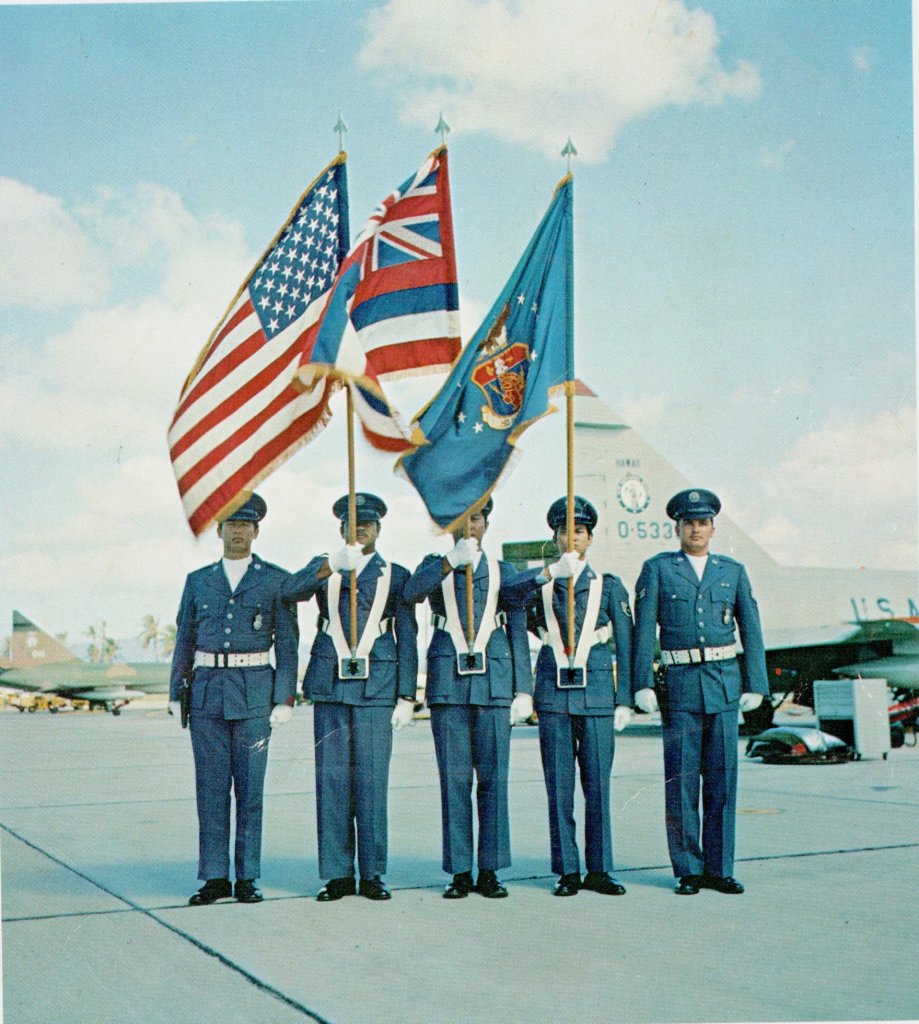
The photograph above is off the cover of the HANG 25 booklet. The booklet documented the Hawai‘i Air National Guard from November 4, 1946 – when it received Federal Recognition – and November 3, 1971. The HANG Color Guard members in the photograph are (L-R): Sgt Gerald P. Akai, SSgt John Isabelo, SSgt Edward M. Ane, SSgt Colin R.H.Y. Leong and Sgt Monte M. Mitchell.
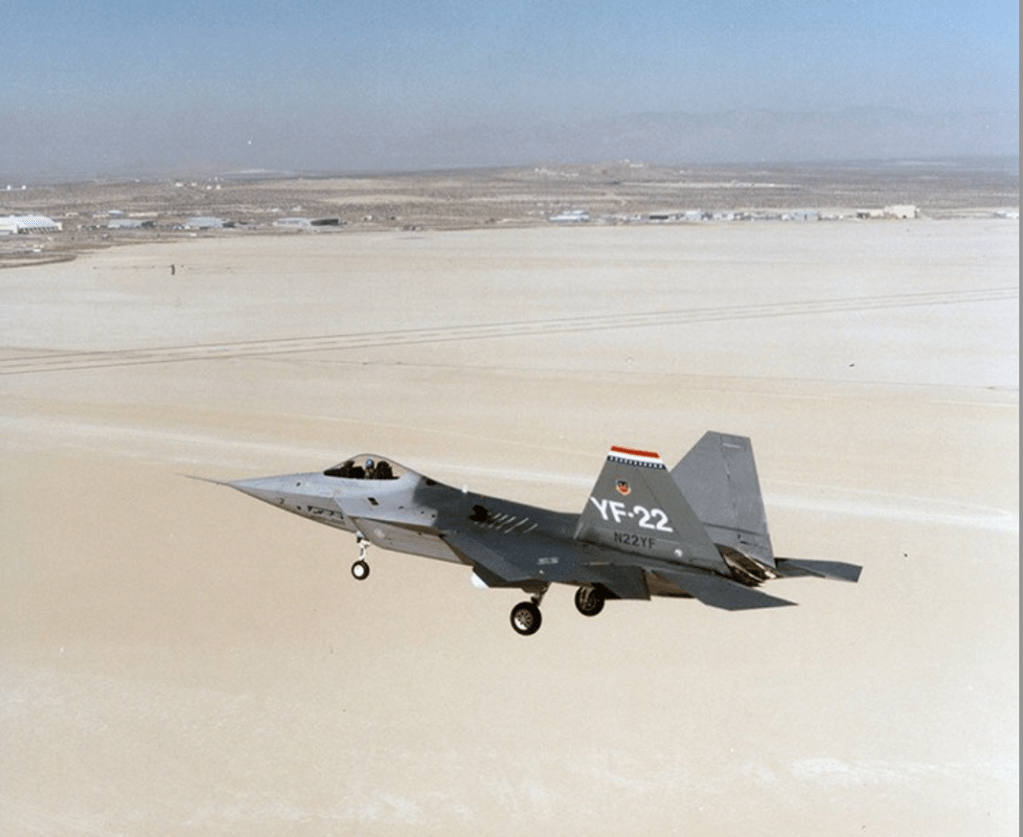
On November 3, 1990 at Edwards AFB, California. The YF-22 demonstrated it supercruise capacity for the first time. It reached Mach 1.58 at 40,000 ft. During the supersonic portion of the flight, the aircraft used 1/3 less fuel than it would if the afterburners had been employed.
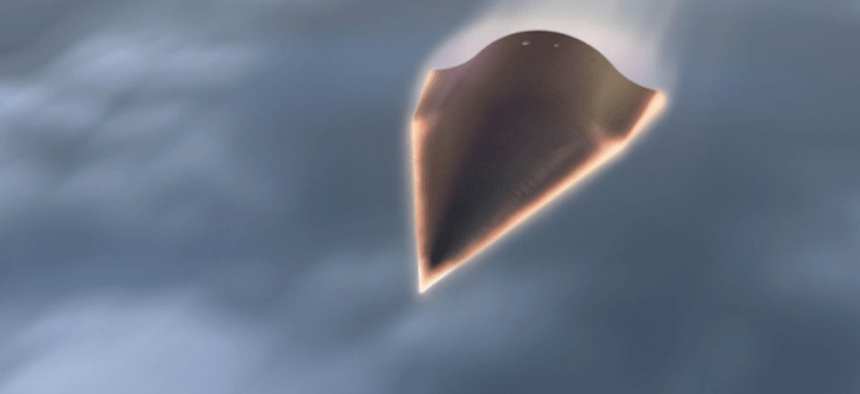
The “deeply concerning” test of a Chinese hypersonic missile shows that the United States has “a lot of work to do” on technology and policy, military officials and lawmakers said yesterday.
The August test, first reported in the Financial Times, featured a hypersonic glide vehicle that entered orbit. Hypersonic weapons descend at more than five times the speed of sound while retaining enough maneuverability to evade missile defenses designed for the more predictable paths of ICBMs. China’s recent orbital test suggests that a weapon based on its vehicle could have essentially unlimited range.
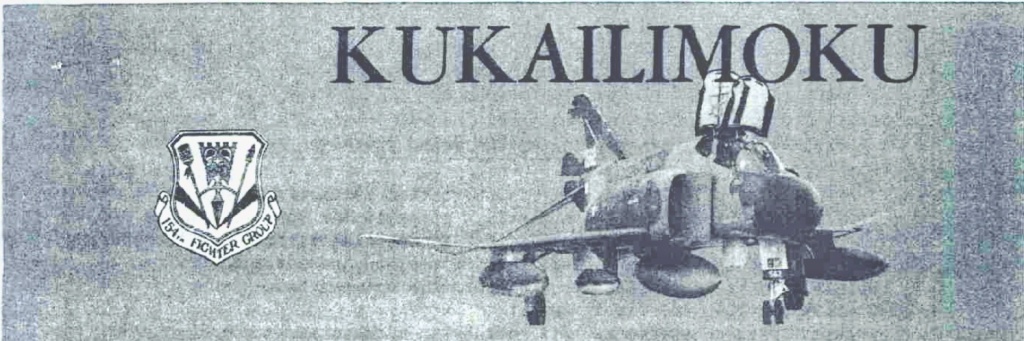
The Kūkā‘ilimoku is the official e-newsletter of the 154th Wing, Hawai’i Air National Guard. The first issue came in September 1957 and continues as a monthly newsletter today.
Today we feature the November 1978 Kūkā‘ilimoku issue. This issue includes the following stories:
* Col John “Saigon” Lee‘s Commander’s Corner column
* NCO Academy and ANG Leadership School information
* Customs and Courtesies

If you drink two or more diet sodas a day, you may be more likely to get kidney disease. Find out how you might be damaging your kidneys without even knowing it

464th Fighter Squadron, SE
Approved by the Army Air Forces for the 464th Fighter Squadron, SE, March 6, 1945. AGO Hawaii GO, February 8, 1947, announced redesignation of the 464th Fighter Squadron, SE to the 199th Fighter Squadron, SE effective May 28, 1947, was endowed with 1946. Thus, the fledgling 199th predecessor, and its history.
Description: Over and through a light red disc, border yellow, a jagged thunderbolt in form of pile-like figure, striking from sinister chief to dexter base, surmounted by a stylized, P-47 aircraft in form of a blue falcon, trimmed red, in flight toward dexter, with machine guns affixed to leading edge of wings, firing forward, proper, all surmounting a large, white cloud formation, edged blue.
Significance: The caricatured, falcon-like aircraft symbolizes the type of planes with which the Squadron is equipped. The highly incensed falcon represents grim purpose, speed and power. Its oversize claws and belly tanks depict operational capabilities of bombing or escort, and the guns signify the lightninglike strike of the bird. In the initial background, potency and swiftness are again exemplified in the form of a golden thunderbolt, which is further tribute to the Squadron’s faith in the P-47. Clouds and sun in the far background designate the aerial battle ground of operations.
History: The 464th Fighter Squadron was activated October 12, 1944, assigned to the 507th Fighter Group. The squadron was inactivated May 27, 1946, in Okinawa.
The squadron flew 496 operational missions from Ie Shima. The 464th was awarded the Distinguished Unit Citation (WD GO 75, July 46) for 13 squadron aircraft shooting down 12 enemy aircraft at Keijo, Korea August 13, 1945. The unit is credited with the following campaigns: Air Offensive, Japan (WD GO 12, February 1946) and Ryukyus (WD GO 75, ]uly 1946).)
The information above is from the Hawaii Air National Guard’s HANG 25 booklet.
From the Air Force Magazine website

A short video of a Chengdu J-20 Mighty Dragon that circulated on the internet October 28 shows a taxiing new two-seat version of the stealth fighter, still in primer and untreated composite. It could indicate at least a trainer version of the airplane or possibly China’s future approach to manned-unmanned air combat teaming.
China has hinted at the existence of a two-seat J-20—possibly known as the J-20B or J-20S—in social media videos and trade show presentations, but the new images, if authentic, indicate the airplane has reached the fabrication stage. China has leaked or allowed videos to be circulated of Mighty Dragons taxiing at the same test facility since the J-20’s existence was first revealed during former Defense Secretary Robert Gates’ visit to that country in 2011.

The Kūkā‘ilimoku is the official e-newsletter of the 154th Wing, Hawaii Air National Guard. The first issue came in September 1957 and continues as an e-newsletter today.
Today we feature the September 1986 Kūkā‘ilimoku issue. This issue includes the following stories:
* AC&W ORI / Cope Cage
* HANG 40 approaching
* CAMS News & Views: lots of familiar names
* 199th Fighter Squadron news
* Howard McKee retires
* Harrison Kim Han, new food service officer
* Promotions: Darren Morris, Wallie Ching, Gary Pang, Russell Miyamoto
* Lt Col Norberto Baysa, new154th Tactical Hospital commander

People with dry eye disease have a new tool for relief: The FDA has approved the first nasal spray – Tyrvaya – to treat the disorder.

Retiree News contacted Michael “Mick” Melich for comments on this photograph.
This looks like the F-4 Flight Simulator. It was located in the old F-4 hangar (Bldg 3400) on the makai side in one of the rooms downstairs. I was an instructor and we routinely would give crews simulators in order to practice emergencies, procedures, etc in order to hone our skills. Probably sometime in the early 1980’s.
Mick served as weapons systems officer (WSO) during the F-4 Phantom era, He transitioned to maintenance when the 154th Wing converted to F-15 Eagles in 1987, He retired as a colonel, serving as the commander of the 154th Maintenance Group
The Kūkā‘ilimoku is the official e-newsletter of the 154th Wing, Hawaii Air National Guard. The first issue came in September 1957 and continues as an e-newsletter today.
Today we feature the November 1994 Kūkā‘ilimoku issue. This issue includes the following stories:
* 154th Group to deploy to Operation Provide Comfort
* New units receive Federal Recognition
* HIANG Awards Banquet
* New Occupational Badges authorized

 Retiree News
